Skip to Content
Shopify
  • By business model
    • B2C for enterprise
    • B2B for enterprise
    • Retail for enterprise
    • Payments for enterprise
    By ways to build
    • Platform overview
    • Shop Pay
    By outcome
    • Growth solutions
    • Shopify
      Platform for entrepreneurs & SMBs
    • Plus
      A commerce solution for growing digital brands
    • Enterprise
      Solutions for the world’s largest brands
  • Customer Stories
    • Everlane
      Shop Pay speeds up checkout and boosts conversions
    • Brooklinen
      Scales their wholesale business
    • ButcherBox
      Goes Headless
    • Arhaus
      Journey from a complex custom build to Shopify
    • Ruggable
      Customizes Headless ecommerce to scale with Shopify
    • Carrier
      Launches ecommerce sites 90% faster at 10% of the cost on Shopify
    • Dollar Shave Club
      Migrates from a homegrown platform and cuts tech spend by 40%
    • Lull
      25% Savings Story
    • Allbirds
      Omnichannel conversion soars
    • Shopify
      Platform for entrepreneurs & SMBs
    • Plus
      A commerce solution for growing digital brands
    • Enterprise
      Solutions for the world’s largest brands
  • Why trust us
    • Leader in the 2024 Forrester Wave™: Commerce Solutions for B2B
    • Leader in the 2024 IDC B2C Commerce MarketScape vendor evaluation
    • A Leader in the 2025 Gartner® Magic Quadrant™ for Digital Commerce
    What we care about
    • Shop Component Guide
    How we support you
    • Premium Support
    • Help Documentation
    • Professional Services
    • Technology Partners
    • Partner Solutions
    • Shopify
      Platform for entrepreneurs & SMBs
    • Plus
      A commerce solution for growing digital brands
    • Enterprise
      Solutions for the world’s largest brands
  • Latest Innovations
    • Editions - Winter 2026
    Tools & Integrations
    • Integrations
    • Hydrogen
    Support & Resources
    • Shopify Developers
    • Documentation
    • Help Center
    • Changelog
    • Shopify
      Platform for entrepreneurs & SMBs
    • Plus
      A commerce solution for growing digital brands
    • Enterprise
      Solutions for the world’s largest brands
  • Try Shopify
  • Get in touch
  • Get in touch
Shopify
  • Blog
  • Enterprise ecommerce
  • Total cost of ownership (TCO)
  • Migrations
  • B2B Ecommerce
    • Headless commerce
    • Announcements
    • Unified Commerce
    • See All topics
Type something you're looking for
Log in
Get in touch

Powering commerce at scale

Speak with our team on how to bring Shopify into your tech stack

Get in touchTry Shopify
blog|Growth strategies

Ecommerce Customer Journey Map: Stages, Touchpoints and Mapping Process

Learn how to map the ecommerce customer journey stages and touchpoints using data-led insights to improve conversions in 2026.

by Elise Dopson
pyramid of six square discs with dotted lines connecting them
On this page
On this page
  • What is the ecommerce customer journey?
  • The customer journey stages (and what to measure)
  • What is a customer journey map?
  • What to include in an ecommerce customer journey map
  • How to map the customer journey
  • Data you need to build a customer journey map
  • Ecommerce customer journeys FAQ

Commerce moves fast. Shopify moves faster.

Try Shopify

Customers face several decisions between interacting with your brand for the first time and becoming loyal customers. You can help them along by catering to them with personalized marketing messages and product recommendations. 

One misaligned touchpoint can cause a potential customer to abandon a cart, or jump ship before ever reaching your store. A personalized experience powered by first-party data throughout the entire shopping journey, from acquisition to checkout, can turn a casual browser into a lifetime buyer. 

This guide shares how to create a customer journey map, including which data to use, with guidance on how to find drop-offs that keep online shoppers in your sphere of influence.

What is the ecommerce customer journey?

The ecommerce customer journey is the complete end-to-end experience of a customer, from when they first become aware of your brand via marketing and advertising, to the final purchase. This includes browsing, product selection, checkout, and post-purchase support. 

Building a clear picture of your customer journey starts with strong first-party data and a unified customer model that creates a single view of your customer no matter where their journey starts and ends. 

When your customer data lives in separate databases, marketing tools, analytics platforms, and customer relationship management (CRM) systems, you only see fragments of the journey. A unified data model combines browsing, purchasing, and order information across every sales channel to give you a complete view of how customers discover your products, what convinces them to buy, and what brings them back for more.

Chart showing the components of Shopify, including ecommerce platform, POS, supply chain, and inventory management.
Shopify is an all-in-one commerce operating system for retail brands.

The customer journey stages (and what to measure)

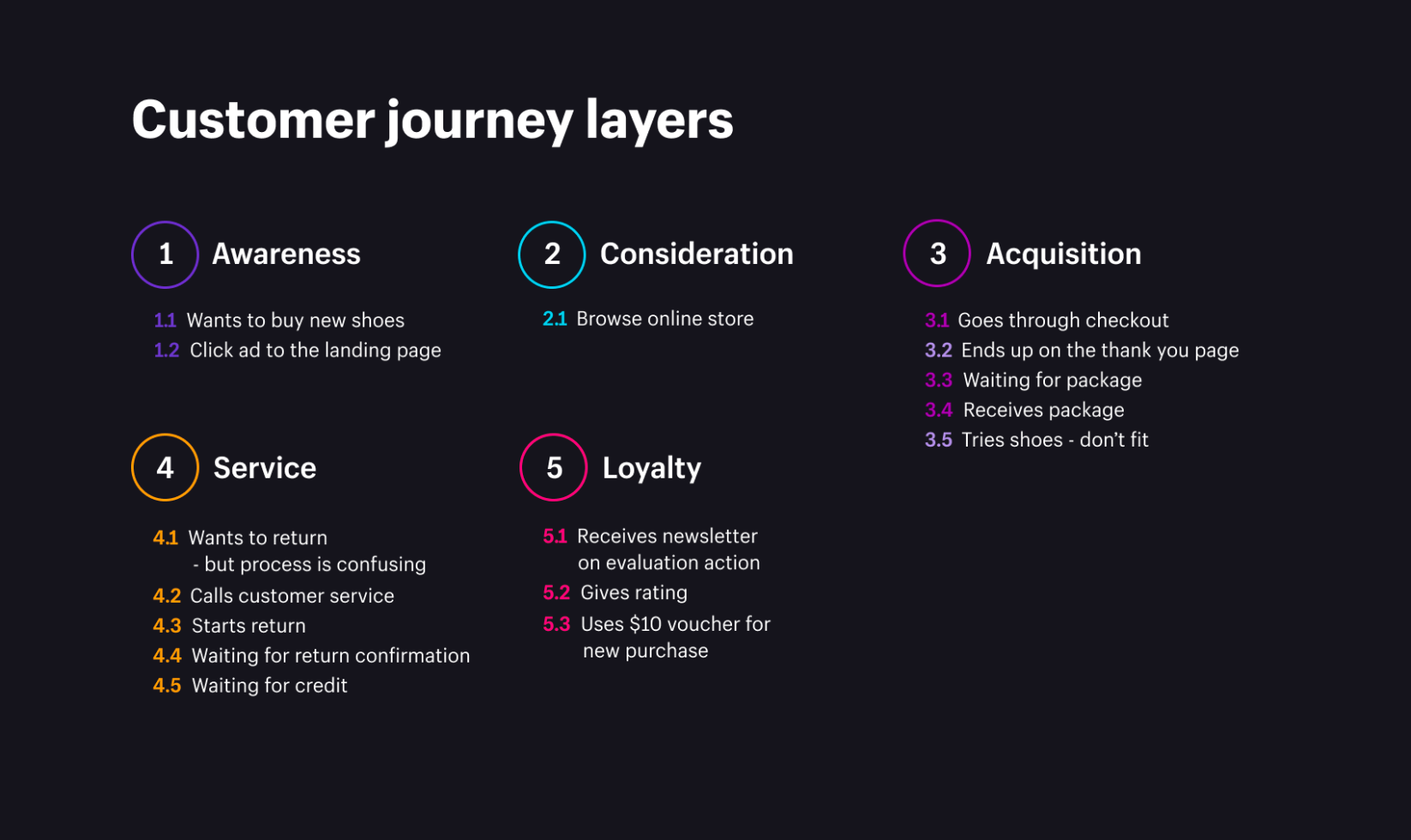
The customer journey consists of several distinct stages:

  1. Awareness
  2. Consideration
  3. Decision
  4. Acquisition
  5. Service or ownership
  6. Loyalty
  7. Advocacy

Awareness

Awareness is the first stage in any ecommerce customer journey. It starts when a customer’s interest is piqued, or they’re already looking for a product or service to solve a problem they’re currently experiencing. Common customer touchpoints at this stage include organic social media posts, paid advertising, or word-of-mouth referrals from existing customers. 

Lead capture turns this initial interest into a direct connection with customers. Retailers pair awareness campaigns with strategic offers like discounts, cash rewards, or loyalty points. You can use the data you collect to power personalized marketing campaigns. 

Consideration

A person’s commitment to finding a solution increases as they progress through to the consideration stage of the customer journey. At the consideration stage, they weigh their options, consult search engines, and visit your online store—as well any competing brands that might serve their needs. 

Automation helps in the consideration phase. Depending on your commerce platform, you can automate touchpoints like:

  • Dynamic product recommendations based on browsing history
  • Automated email sequences triggered by specific page visits
  • Personalized retargeting ads showing recently viewed items
  • Smart pop-ups offering assistance based on scroll depth and time on page

Automation also helps throughout the lead-nurturing process. For example, you can send behavior-triggered email campaigns, employ AI chatbots on your website, and send price-drop notifications for items in wishlists. 

Decision 

At this point, the customer has narrowed their choice. They’re looking for reasons not to buy. Your job is to eliminate every possible objection before they make their decision and head to checkout.

Encourage customers to choose your brand with product detail pages (PDPs). Go beyond basic descriptions with video, 3D models, or augmented reality. If you offer complex product tiers, provide a side-by-side comparison matrix to help them choose the right product for their needs.

High-intent users in this stage of the ecommerce customer journey look for third-party validation. Display reviews from verified buyers and highlight expert endorsements to nudge them further along the funnel. 

Acquisition

Acquisition is when a potential customer becomes an actual one through conversion, whether that’s through a purchase on your site or signing up for a subscription or service on your ecommerce store, in a marketplace, at a retail location, or through a social media storefront. 

Checkout is where the customer is made. A seamless and personalized checkout experience can make conversion faster and easier, while building long-term relationships. 

During this stage, offering trusted payment methods like Shop Pay can significantly influence outcomes. Shop Pay users are 77% more likely to make additional purchases, which supports your acquisition goals.

Service or ownership 

Inevitably, a segment of customers will need help with their order. Whether they want to initiate a return, understand how the product works, or inquire about discounts on future purchases, customers expect responsive and helpful assistance through their preferred communication channels.

Retail brands can offer customer service through multiple touchpoints. Traditional channels like email and phone support are important, while live chat has become increasingly popular for its convenience. 

AI-powered chatbots have become a first line of support, handling common queries 24/7 and directing more complex issues to human agents. These automated solutions can quickly address questions about order status, return policies, and product information. 

Loyalty or retention

Loyalty happens when existing customers continue purchasing from your brand. It’s the final stage of the journey, but not the least important. A study from Gorgias shows that despite only accounting for 21% of a brand’s audience, loyal customers contribute 44% of a merchant’s total revenue.

Aside from initiating another purchase and springing back to an earlier stage in the journey, customer touchpoints that frequently happen at the customer retention stage include leaving a review or recommending the product to a friend.

Advocacy

Advocacy happens when a customer’s emotional connection to the brand goes beyond the utility of the product itself. The goal is to find your most loyal shoppers and turn them into brand ambassadors. Reward loyal customers with early access to drops, limited-edition products, or commission on new shoppers they refer.

Beauty brand Doe Lashes even has a Discord community for VIP buyers, featuring a sign-up form where customers can opt in to become a product tester. 

What is a customer journey map?

An ecommerce customer journey map is a diagram that details how customers engage with your company across various interfaces including online, retail, and contact with your customer support team. It tells you where users are coming from, how many days or visits it takes them to move from one stage to another, what the goal of the user is in each stage, and how each segment behaves.
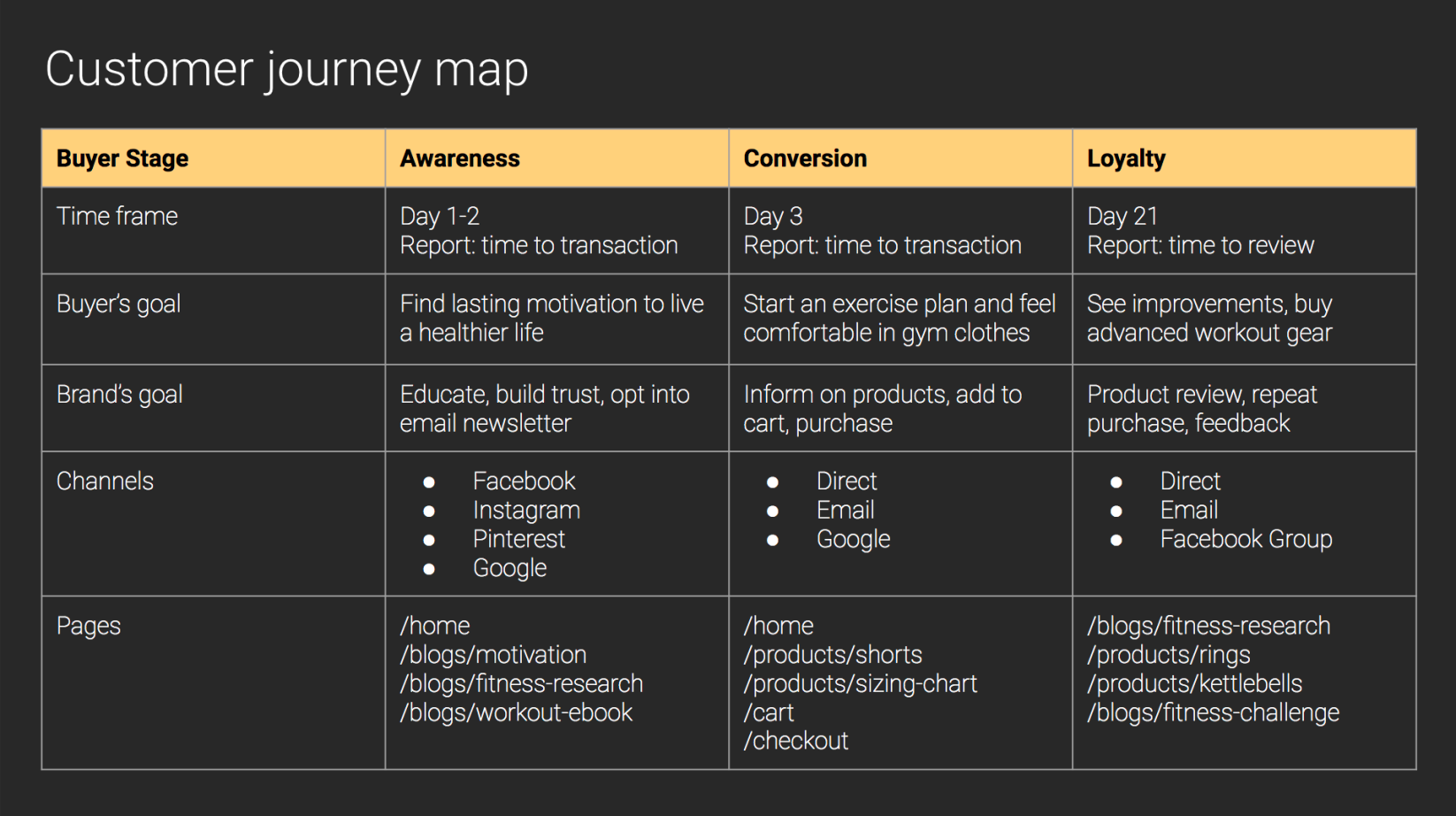
Example customer journey map showing the buyer’s time frame, brand’s goal, channels, and pages visited at each stage.
This example of a customer journey map shows how customers interact with a brand.

What to include in an ecommerce customer journey map 

An ecommerce customer journey map acts as a diagnostic tool, pinpointing exactly where shoppers drop off. To make a map, include:

Touchpoints, channels, and page types

People might find your business through a referral on social media. They might read your tweets or browse your Instagram. Then, they might head back to your site for more—all before handing over their credit card. 

Visualize what this omnichannel experience looks like by tracking:

  • Touchpoints: What actions do customers take at each stage of the customer journey? Examples include talking with a chatbot, reading reviews from other customers, or opening order confirmation emails. 
  • Channels: Where does the touchpoint happen? Examples include your direct-to-consumer (DTC) storefront, social commerce storefronts, marketplaces, in-store visits, or through email. 
  • Page types: If the interaction takes place on your website, what page type do they consult? Examples include informational pages (about, contact, returns policies), discovery pages (quizzes, buying guides, collections), and post-purchase support (returns portals and loyalty dashboards). 

TIP: Shopify is the only platform to natively unify ecommerce and point of sale (POS) on the same infrastructure. With no need for patchy middleware or custom integrations, you have one core “business brain” to manage the entire customer journey. A leading independent consulting firm found this reduces total cost of ownership (TCO) by up to 36%.

Customer goals and pain points

Customers want to achieve something at every stage of their buying journey. Combine this insight with the primary challenge they want to solve—both of which influence your personalization strategy.

Here’s what that might look like for a home furnishings brand:

Customer journey stage Customer’s goal Customer’s pain point Strategy
Awareness Find decor inspiration for their small living room Overwhelmed by options and limited by space Create a style quiz that helps customers build their own curated look
Consideration Check dimensions and fabric durability They have a dog and small children and are worried furniture will be ruined Use social media ads to show spill resistance and offer a free fabric swatch kit
Decision Validate sizing Unsure on whether the sofa will fit in their small living room Augmented reality (AR) “view in my room” feature
Acquisition Get the best value for money Anxiety about spending $2,000 on a sofa Display social proof and offer buy now, pay later (BNPL) options through Shop Pay Installments
Service Make sure to be home to accept the delivery and install the new sofa Taking the day off work to accept delivery and assembling it incorrectly Real-time order tracking with installation guides sent 24-hours before delivery day
Loyalty Protect their investment and add extra pieces to match their new sofa Uncertainty around maintaining the fabric and choosing a rug that matches the sofa’s design Subscription offer for your fabric maintenance kit and personalized recommendations for rugs popular with customers who bought the same sofa


Drop-off points and hypotheses 

Not everyone who initiates a customer journey will stay until the end. Look for specific drop-off points where lots of users left your site without progressing. Run a data analysis using first-party data, session recordings, and user feedback to find out why. This acts as a starting point for future website optimization.

For instance, you might find the biggest drop-off at the acquisition stage. Checkout conversion rates are below industry average, and session recordings show people exit after hovering their mouse over the shipping address field. Run an A/B test to see whether enabling address autocomplete—which suggests the street name, city, and ZIP code based after the user starts typing—increases conversion. 

The Fast Lane to Enterprise Value

We separate fact from fiction and share how top brands go from maintenance to innovation when they switch to Shopify.

Watch the webinar

Three steps to map customer journeys with data

The hard part isn’t collecting data; it’s knowing what to do with it. Enterprise brands have access to millions of data points, including heatmaps, GA4 events, sentiment scores, and enterprise resource planning (ERP) logs. If you don't define the scope, you’ll wind up trying to map every journey case for every customer type simultaneously.

While customer experience management is important, the reality is that designing a robust omnichannel retailing strategy and managing the experience within the entire customer lifecycle is challenging. A more strategic approach is to identify your most valuable customers (i.e., personas) and map their journeys one stage at a time.

Create customer personas to envision what your ideal customer might be going through when seeking your product. For a head start, identify recent customers or brand loyalty program members who made a purchase on your website. 

Interview them to answer the following questions:

  • Why were they looking for the product that they bought on your website?
  • How did they research the product?
  • What criteria helped them make their purchase decision?
  • Which of your competitors’ sites did they visit while evaluating products?
  • Why did they choose your website?
  • What was their experience like on your website when buying the product?
  • What can be improved?

Start small and prioritize the most critical customer personas for your business. The real key is using your existing data to map the ecommerce customer journey based on psychological principles to drive more sales.

1. Monitor how customers interact with your ecommerce business

Understanding how users move through your store is critical to producing sales that follow a psychologically informed model. For example, why would sales be low if you’re offering a discount code to all first-time visitors? The offer might be great, but consumers still lack the motivation to buy. In this case, it doesn’t matter how much products are discounted.

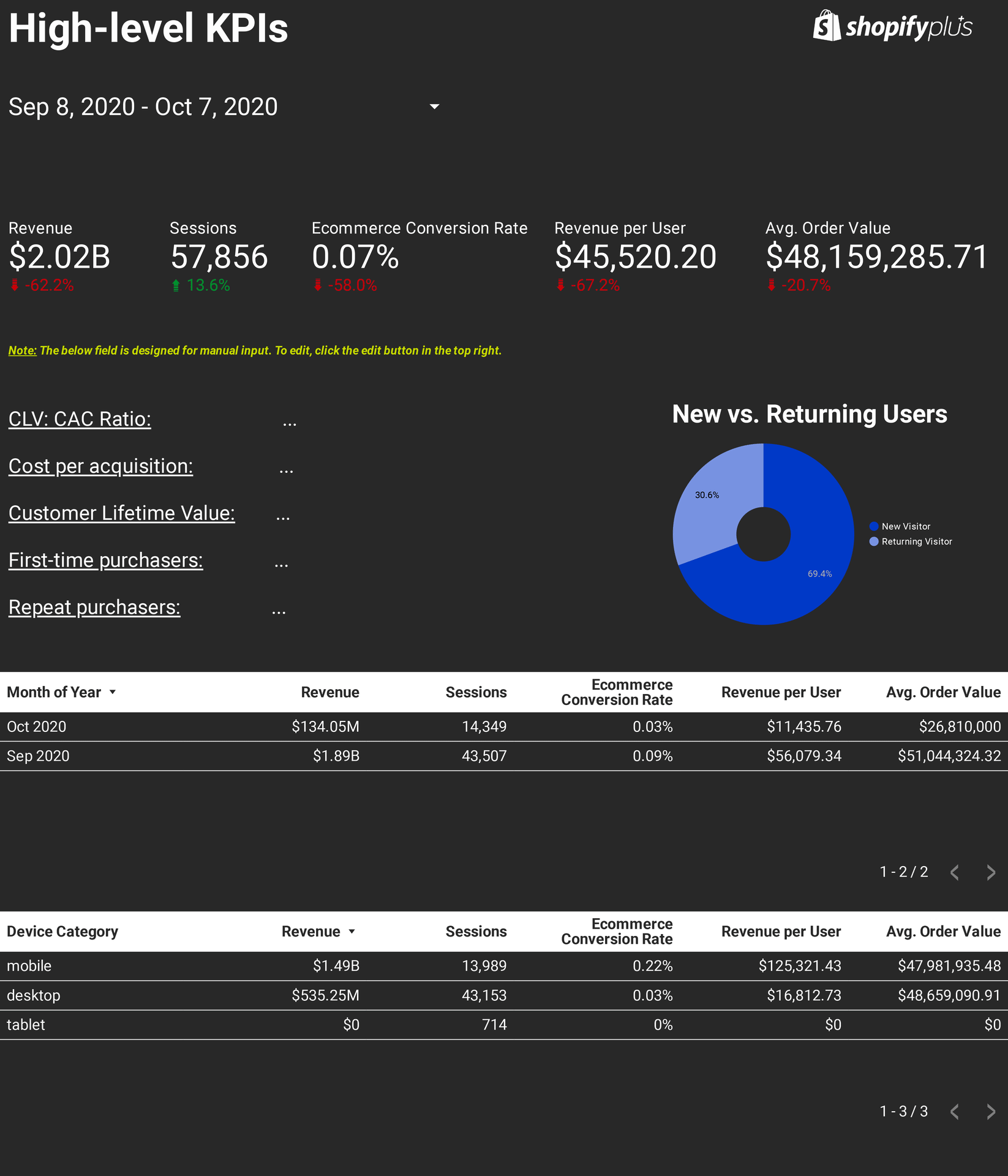
This common scenario can be uncovered via the Google Analytics Funnel exploration report, which will allow you to select a path you’d like to look into, or the Path exploration report, which gives you a look into your user’s journey. 

Examine different segments of users, whether it’s first-time visitors, returning visitors, or purchasers, or create a custom segment for visitors with long session durations but no purchases. Segments can be based on demographic or order data, but first-party data can be used to create even more targeted segments like primary shopping channels, loyalty program engagement, and purchase history patterns. 
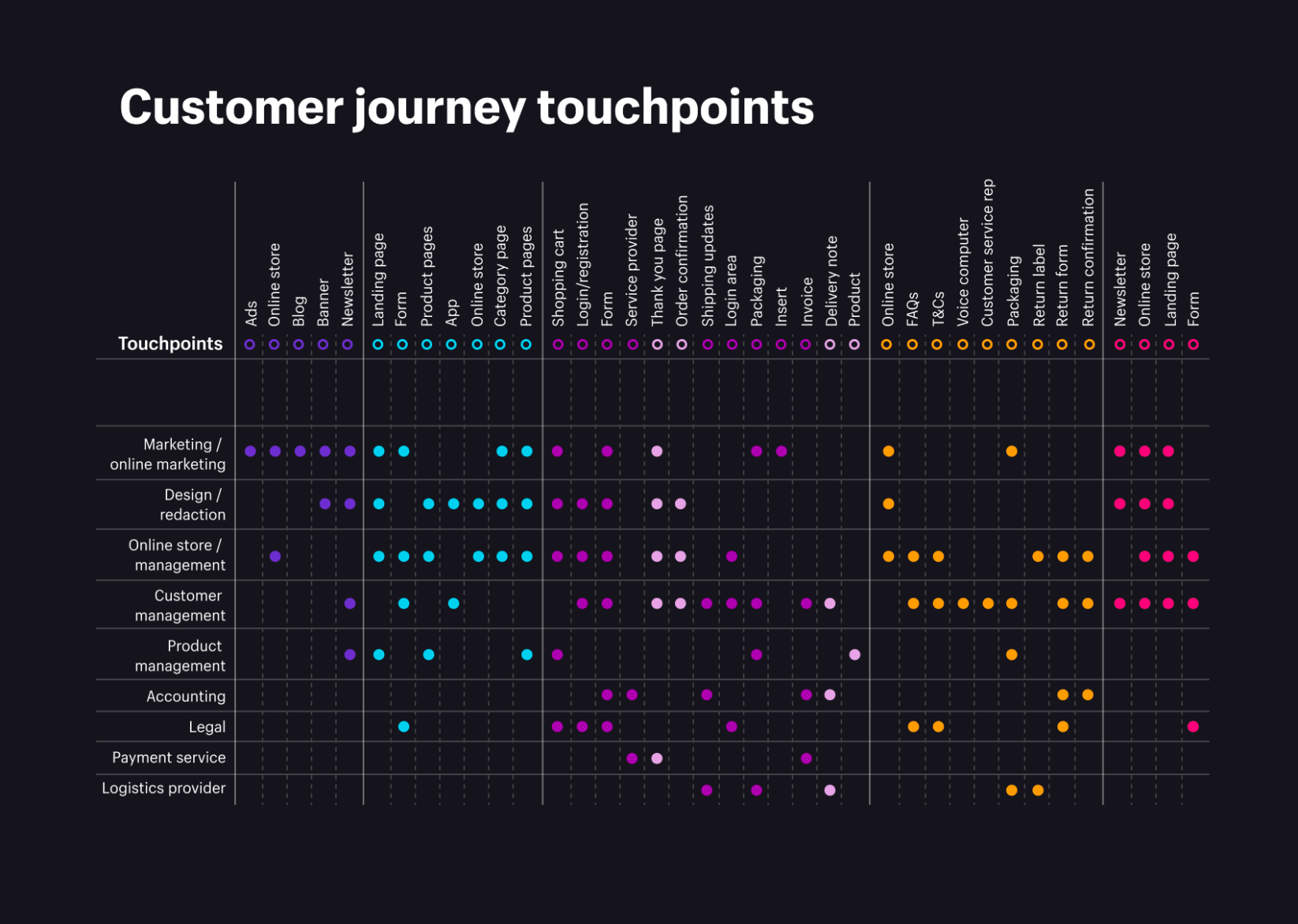
Graph of the touchpoints a customer has with a brand.
Touchpoints a customer has with a brand, starting with ads and social media and ending with newsletters.

Install Session Recording & Replays on your Shopify store to record visitor sessions. You’ll get heatmaps and also be able to see user behavior as they move from page to page. 

Detailed session histories can generate ideas of which pages correspond to each stage of the journey. For instance, your blog or story pages are often perfect jumping-off points to educate users. Hiya Health uses their “Our Story” page to build awareness, using it to push consumers from one stage to the next.
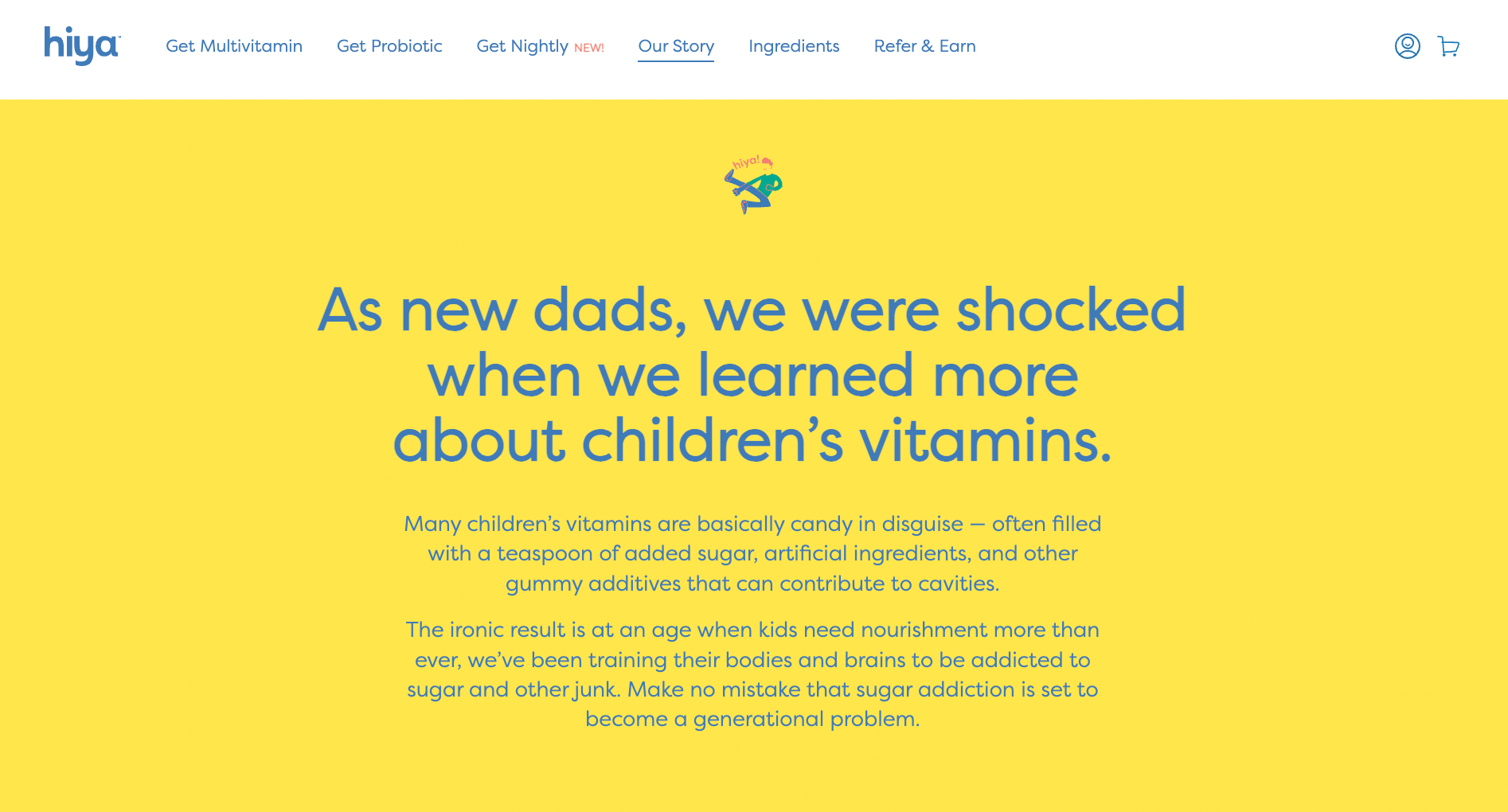
Hiya Health’s story page explaining how the brand started when its founders were shocked about the contents of children’s vitamins.
Hiya Health’s story page explains how the brand started when its founders were shocked about the contents of children’s vitamins.

2. Analyze the top conversion path report to see what platforms people use at each stage

Knowing the typical paths on your site is one thing, but it’s another to understand when and why customers use multiple channels before buying. 

Note these different channels and their specific order sequencing before purchase. If you notice that social plays a huge role in awareness, add that to your buyer’s journey. You can later tap into this customer data and share content on social that focuses on brand building rather than selling, like Rare Beauty:
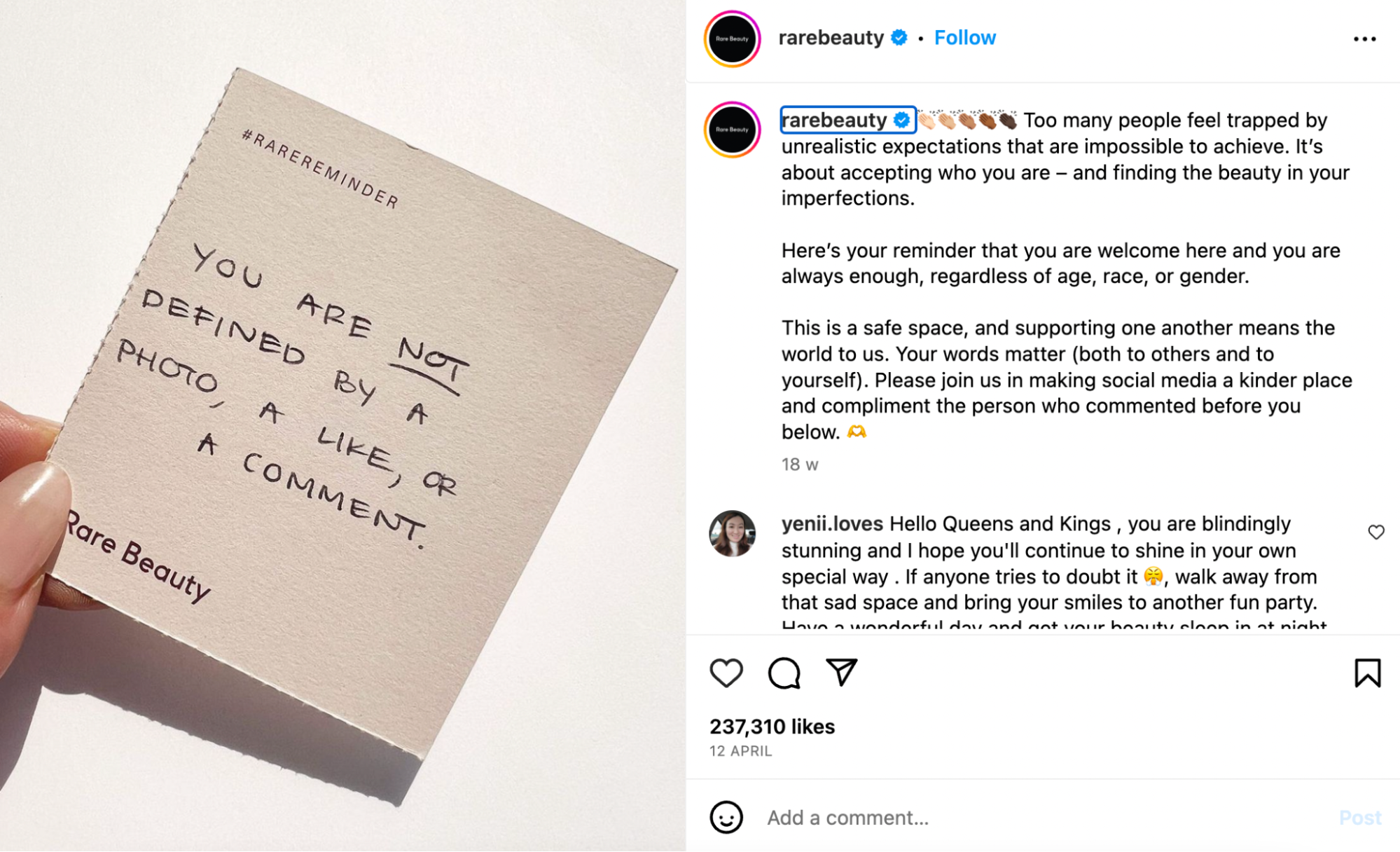


View this post on Instagram


A post shared by Rare Beauty by Selena Gomez (@rarebeauty)

LaCkore Couture takes this one step further by prioritizing two metrics: average order value (AOV) and customer lifetime value (CLV). 

“We primarily use Triple Whale to gather in-depth insights about our customer behavior and purchasing patterns,” says founder Erin LaCkore. “Complementing this, Google Analytics lets us understand traffic sources, time spent on our site, and other key metrics. All this data is visualized and simplified in Google Data Studio, allowing our team to draw actionable insights at a glance.”

Erin adds that by using a combination of these data points she gets a snapshot of the average spend each time a customer shops and the total projected revenue from a single customer over their relationship with the brand. 

“Based on AOV and CLV, we adjust our value ladder,” Erin says. “Introducing mid-tier products, bundle offers, or customer loyalty programs ensures customers feel they’re getting immense value, while we ensure profitability.” 

TIP: Shopify unifies inventory, customer, and order data wherever you sell, with no integrations required. Use this data to fill over 60 reporting templates, or custom-code your own ecommerce reports inside Shopify Analytics.

3. Mold your customer journey to the needs of your visitors

Customer data analysis uncovers what your customers care most about. Then it’s your job to serve them the content, products, and offers in line with their desires. If prospective customers aren’t ready to buy, they won’t. And even if they are motivated, the wrong trigger or ability could limit their potential to slide down your funnel.

Use your first-party data to create personalized storefronts. Consider adding:

  • Self-service features like order tracking and returns
  • Wish list functionality
  • Personalized product recommendations
  • Saved shopping carts
  • Custom collection pages based on interests

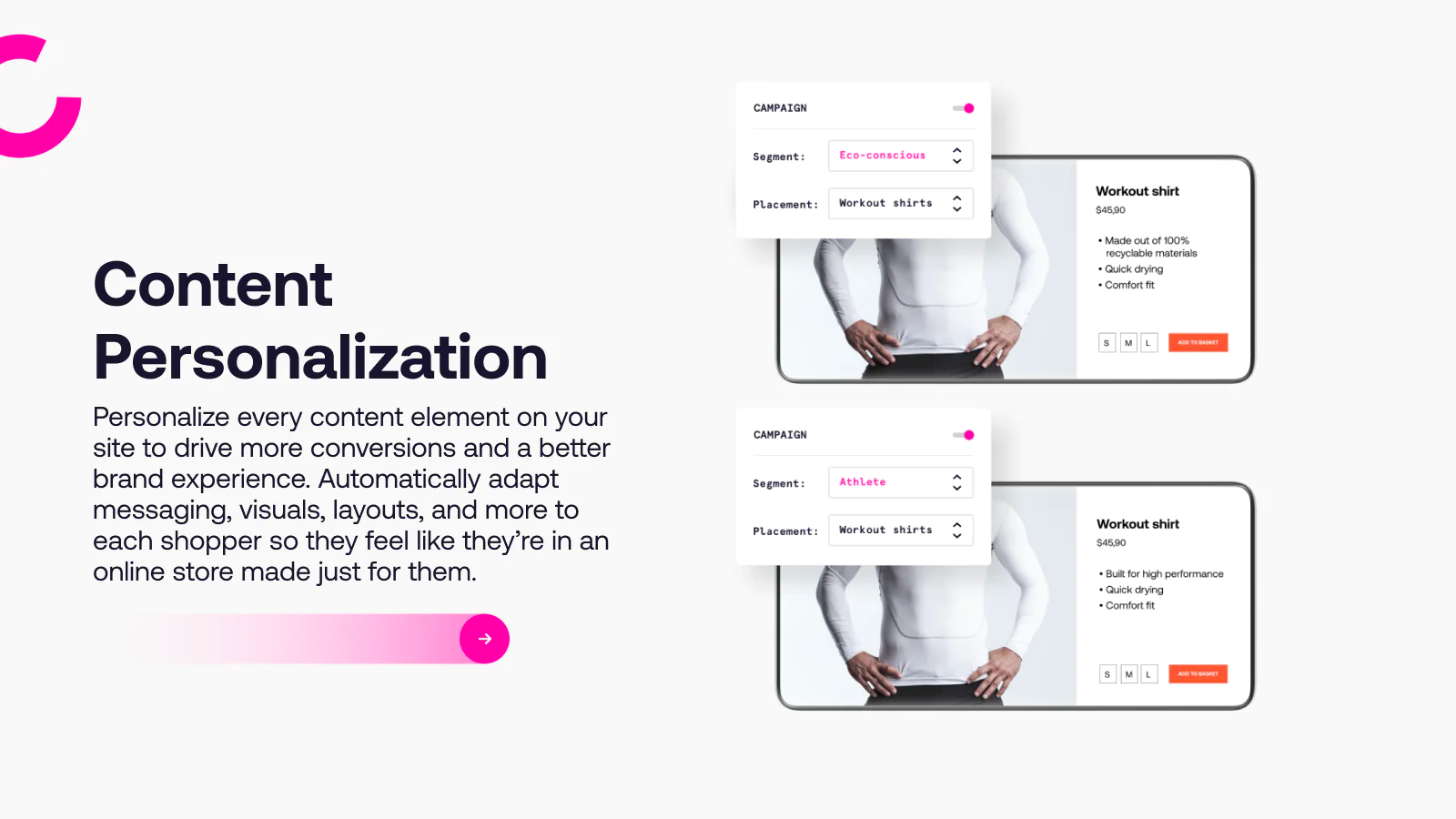
For example, if you’re an outdoors brand, you could use customer account data to show different homepage layouts to hikers versus campers. Hikers see trail gear collections first, while campers see tent and sleeping bag recommendations.

Only after customer journey mapping can you test different types of content and offers at each stage. For example, test a storytelling email versus an offer as your email autoresponse when someone first signs up. Or, try split testing your marketing campaigns with blog posts, “About Us” videos, and offers. 

Apps like StoreView or Klaviyo guide this testing. Personalization platforms like Nosto also integrate with Shopify, allowing you to provide personalized shopping experiences based on previous key touchpoints at scale, with no manual data entry required.

Data you need to build a customer journey map

Ecommerce journey maps shouldn’t be built on intuition. Blend quantitative metrics with qualitative insights to map how customers actually behave.

Behavioral and analytics data

Hard data reveals the footprint your customers leave when they interact with your brand. 

Identify high-friction zones and high-value paths with behavioral data like:

  • Traffic sources and referral paths: Look where customers originate. Did they come from organic search, high-intent pay-per-click (PPC) campaigns, or influencer posts on social media?
  • Navigation flow: Map the common sequences. Do they go from Home > Collection > PDP, or are they landing directly on PDPs via social ads? Optimize the user experience for the most common journeys.
  • Exit rates: Track microconversions and the exact point of exit. A high drop-off at the shipping selection stage, for example, usually signals a transparency issue with your landed costs. Baymard reports 39% of all carts are abandoned due to extra fees.

Voice-of-customer inputs 

If analytics tell you what is happening, voice-of-customer (VoC) inputs tell you why. This qualitative data adds the emotional layer to your journey map, helping you understand a customer’s mindset at each stage.

Source VoC data through:

  • Support tickets: Recurring questions about sizing, returns, or technical specs indicate gaps in your content.
  • Post-purchase surveys: Send a quick survey immediately after a transaction. Ask: "What was the hardest part about shopping with us today?"
  • User testing: Watch users interact with your ecommerce site and ask why they complete certain actions. For example, customers might drop off at collection pages because they couldn’t find a relevant search filter. 

Monitor your overall customer journey to anticipate and resolve customer needs

Buying is complex, because there’s never been this number of ecommerce platforms, channels, options, alternatives, or competitors.

If you want to grow your business, take a deep look at your customer personas and their journey. Customer journey maps should be adjusted on a monthly or quarterly basis to answer the questions “How can we add more value to our visitors at each step of this journey?” or “How can we help customers at each stage achieve their goals more easily?”

The brands that win do more than just sell products—they consistently deliver value throughout the customer journey. When you pair deep customer insights with Shopify's commerce tools, you create experiences that naturally lead to growth.

Data that will change your decision to migrate

Shopify delivers the fastest time to value.* The research comes from EY. The proof comes from real brands.

Watch the webinar

Read more

  • How to Amass +110k Micro-Influencers on Instagram & Increase Referral Sales 300%
  • How to Overcome Your Daily Operational Frustrations to Focus on Future Growth
  • Product Listing Ads [Gifographic]: How to Increase ROAS & Sales
  • How Ecommerce Teams Get Buy-in To Sell More
  • Omnichannel Inventory Management: Solving Optimization Challenges to Increase Profits
  • 5 Ways Brands Grow Revenue Using Text Message Marketing
  • Personalized Shopping Experiences: Ways to Implement for Your Commerce Business
  • Multi-Segment Marketing Strategy: How To Create One & Examples
  • Returning Ecommerce Visitors: How to ‘Nudge’ Non-Buyers into Taking the Customer Leap

Ecommerce customer journey FAQ

What are ecommerce customer journey touchpoints?

Ecommerce customer journey touchpoints describe any interactions where a customer engages with your brand. They can take place online or offline. Examples include social ads, email flows, unboxing experiences, and loyalty programs. 

How is a journey map different from a funnel?

An ecommerce funnel is a linear visualization of how people progress through your funnel. A journey map adds extra context. It shows the end-to-end experience, including channels and touchpoints your customers make throughout. 

What data do you need to build a journey map?

Data required to build a customer journey map include:

  • Traffic sources
  • Referral paths
  • Navigation flow
  • Exit rates
  • Session recordings 
  • Support ticket sentiment
  • Post-purchase feedback surveys
  • Voice-of-customer feedback through user testing 

How do you find drop-off points?

Use funnel visualization reports to identify pages with abnormally high exit rates relative to industry benchmarks. Heatmaps and session replays can also spot friction that causes users to abandon their sessions.

How often should you update a journey map?

Treat your customer journey map as a living document that evolves alongside shifts in consumer behavior and your tech stack. Review it whenever you redesign your website, launch a new product, add a new marketing channel, or expand into a new market.

What metrics matter by stage?

KPIs differ depending on a customer’s stage in the buying journey:

  • Awareness: Impressions, reach, and click-through rate
  • Consideration: Product page views, dwell time, and bounce rate 
  • Decision: Add-to-cart rate and checkout initiation
  • Acquisition: Conversion rate, cart abandonment, and customer acquisition costs
  • Service: Time to resolution and customer satisfaction (CSAT) score
  • Loyalty: Repeat purchase rate and CLV
  • Advocacy: NPS and referral conversion rate 
ED
by Elise Dopson
Published on 10 Feb 2025
Share article
  • Facebook
  • Twitter
  • LinkedIn
by Elise Dopson
Published on 10 Feb 2025

The latest in commerce

Get news, trends, and strategies for unlocking new growth.

By entering your email, you agree to receive marketing emails from Shopify.

popular posts

Enterprise commerceHow to Choose an Enterprise Ecommerce Platform for Your Scaling StoreTCOHow to Calculate Total Cost of Ownership for Enterprise SoftwareMigrationsEcommerce Replatforming: A Step-by-Step Guide To MigrationB2B EcommerceWhat Is B2B Ecommerce? Types + Examples
start-free-trial

Unified commerce for the world's most ambitious brands

Learn More

popular posts

Direct to consumer (DTC)The Complete Guide to Direct-to-Consumer (DTC) Marketing (2025)Tips and strategiesEcommerce Personalization: Benefits, Examples, and 7 Tactics for 2025Unified commerceHow To Sell on Multiple Channels Without the Logistical Headache (2025)Enterprise ecommerceComposable Commerce: What It Means and Is It Right for You?

popular posts

Enterprise commerce
How to Choose an Enterprise Ecommerce Platform for Your Scaling Store

TCO
How to Calculate Total Cost of Ownership for Enterprise Software

Migrations
Ecommerce Replatforming: A Step-by-Step Guide To Migration

B2B Ecommerce
What Is B2B Ecommerce? Types + Examples

Direct to consumer (DTC)
The Complete Guide to Direct-to-Consumer (DTC) Marketing (2025)

Tips and strategies
Ecommerce Personalization: Benefits, Examples, and 7 Tactics for 2025

Unified commerce
How To Sell on Multiple Channels Without the Logistical Headache (2025)

Enterprise ecommerce
Composable Commerce: What It Means and Is It Right for You?

subscription banner
The latest in commerce
Get news, trends, and strategies for unlocking unprecedented growth.

Unsubscribe anytime. By entering your email, you agree to receive marketing emails from Shopify.

Popular

Headless commerce
Headless Commerce: Complete Guide for Businesses (2026)

29 Aug 2023

Growth strategies
How To Increase Conversion Rate: 14 Tactics for 2025

05 Oct 2023

Growth strategies
7 Effective Discount Pricing Strategies to Increase Sales (2025)

Ecommerce Operations Logistics
Third-Party Logistics (3PL): Complete Guide for 2026

Ecommerce Operations Logistics
Ecommerce Returns: Average Return Rate and How to Reduce It

Industry Insights and Trends
What is Global Ecommerce? Trends and How to Expand Your Operation (2026)

Customer Experience
15 Fashion Brand Storytelling Examples & Strategies for 2025

Growth strategies
SEO Product Descriptions: 7 Tips To Optimize Your Product Pages

Powering commerce at scale

Speak with our team on how to bring Shopify into your tech stack.

Get in touchTry Shopify
  • Shopify

    • What is Shopify?
    • Shopify Editions
    • Investors
    • Sustainability
  • Ecosystem

    • Developer Docs
    • Theme Store
    • App Store
    • Partners
    • Affiliates
  • Resources

    • Blog
    • Compare Shopify
    • Guides
    • Courses
    • Free Tools
    • Changelog
  • Support

    • Shopify Help Center
    • Community Forum
    • Hire a Partner
    • Service Status
  • Australia
    English
  • Canada
    English
  • Hong Kong SAR
    English
  • Indonesia
    English
  • Ireland
    English
  • Malaysia
    English
  • New Zealand
    English
  • Nigeria
    English
  • Philippines
    English
  • Singapore
    English
  • South Africa
    English
  • UK
    English
  • USA
    English

Choose a region & language

  • Australia
    English
  • Canada
    English
  • Hong Kong SAR
    English
  • Indonesia
    English
  • Ireland
    English
  • Malaysia
    English
  • New Zealand
    English
  • Nigeria
    English
  • Philippines
    English
  • Singapore
    English
  • South Africa
    English
  • UK
    English
  • USA
    English
  • Terms of Service
  • Legal
  • Privacy Policy
  • Sitemap
  • Your Privacy ChoicesCalifornia Consumer Privacy Act (CCPA) Opt-Out Icon