

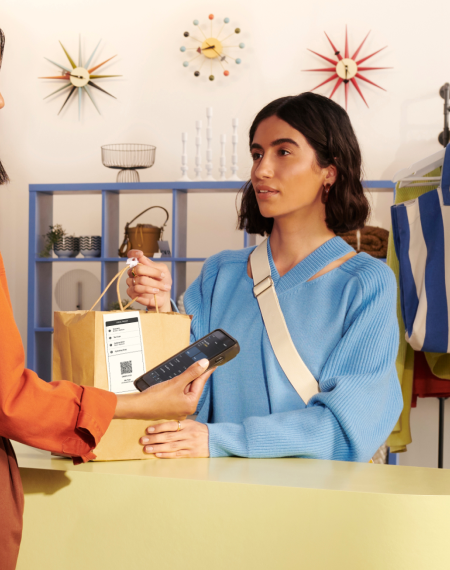

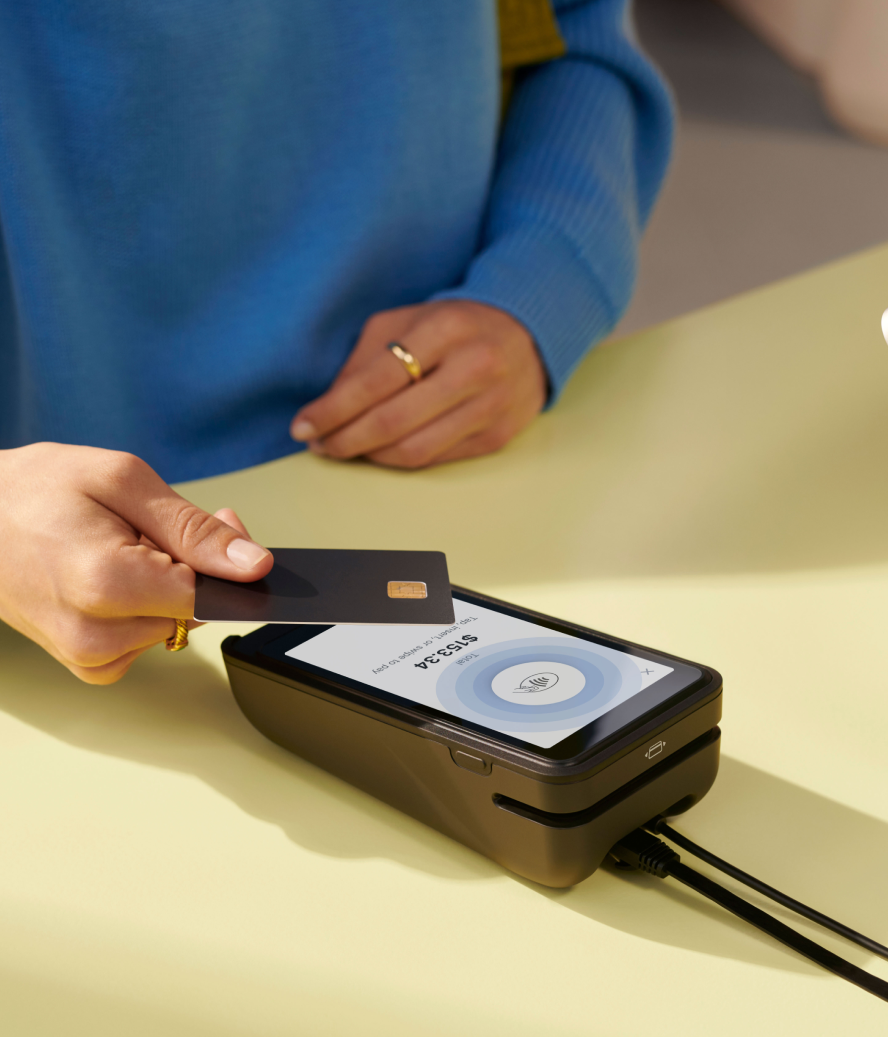

A point-of-sale (POS) system is a combination of hardware and software that empowers businesses to ring up sales, accept payments, and check out customers. Effective POS systems sync sales data across retail stores and online sales channels, providing real-time inventory tracking and customer insights.
Whether you’re opening a retail store, launching a pop-up shop, selling at events, or even selling out of the trunk of your car, you need a POS system to accept payments and sell in person.
But finding the right POS system isn’t always easy in a $114 billion market—especially if your business started online and you’re selling in person for the first time. Ahead, you’ll learn the basics of a POS system, which features matter most for retailers, and how to choose the right system for your business.
What is a point-of-sale (POS) system?
A point-of-sale (POS) system is hardware and software that processes transactions, accepts payments, and manages inventory at the moment of purchase—whether in a brick-and-mortar retail store, on the go, or online.
In other words, the POS system’s use case extends beyond just ringing up sales; it’s the central hub for running your retail operations. In 2026 and beyond, it’s also your inventory tracker, customer database, marketing engine, and business dashboard.
How does a POS system work?
Let’s walk through what actually happens when a sale goes down at a retail store using a modern, cloud-based POS system:
1. The product gets scanned or tapped in
The customer’s ready to buy. You scan the item’s barcode or tap it into your POS catalog. If you’re using a mobile device like a tablet or phone, it’s just a few taps. (Online, this is the digital equivalent of selecting the Checkout button.)
2. The POS system calculates the total
Taxes, discounts, loyalty points, and shipping—the POS handles it all. If there’s a promotion running or a VIP customer in front of you, it applies discounts automatically.
3. The customer picks how to pay
Cash? Card? Apple Pay? Tap to pay with a phone or smartwatch? You select the payment option in your system, and the customer completes the transaction with a swipe, tap, or quick scan.
4. The point-of-sale transaction is finalized
Behind the scenes, your POS system sends the payment details to your payment processor. That processor talks to your bank (the acquiring bank) and the customer’s bank (the issuing bank). You get the approval in seconds, and the sale is complete.
Want a receipt printed? Done. Prefer to send a receipt by text or email? Also done. The POS system takes care of it and logs the transaction for future reference.
As soon as the sale is complete, that product’s stock count updates in your system. You don’t have to update anything manually.
You’ve just sold a product, but you’ve also captured valuable information. The POS system logs the transaction, tracks performance metrics, and (if the customer opts in) stores their details for loyalty programs, receipts, or personalized offers later.
Software components of a POS system
This is the system you log in to every day: the digital hub where your sales, inventory, customer data, and staff activity converge.
A solid POS software platform should let you:
- Ring up transactions and accept all payment types (cash, chip, swipe, tap, mobile wallets)
- Apply promotions, loyalty rewards, or store credit automatically
- Track inventory in real time, flag low stock, and sync product availability across locations
- Build unified customer profiles, store purchase history, and drive personalized marketing
- Manage employee logins, set permissions, and track working hours
- Generate performance reports, export sales data, and analyze trends
- Integrate with ecommerce platforms, customer relationship management (CRM) systems, accounting software, and other tools
Hardware components of a POS system
The hardware you use depends on whether you’re running a retail store, restaurant, pop-up, or mobile business.
Here are the most common POS hardware components:
- Touchscreen terminal, tablet, or smartphone. The primary device for running POS software. Many businesses use an iPad or Android tablet at the counter, or have employees carry them on the retail floor for a more customer-first shopping experience.
- Card reader. This device accepts chip, swipe, and contactless payments, including credit and debit cards, Apple Pay, Google Pay, and smartwatches.
- Cash drawer. Still essential for cash-handling businesses. Many cash drawers open automatically when a sale is completed.
- Receipt printer. Provides a printed proof of purchase. Even in a digital-first world, many customers still want a paper receipt.
- Barcode/QR scanner. This device speeds up checkout, reduces manual entry, and keeps inventory accurate with every scan.
- Internet connection. Cloud-based POS systems rely on stable Wi-Fi or mobile data to process card payments and sync transactions in real time.
- Power supply and UPS. Keep your system running. A battery backup known as an uninterruptible power supply (UPS) protects against outages, which can bring operations to a halt.
Add-ons and extras
Some businesses need more than the basics, especially in food service, high-volume retail, or specialty retailers.
That’s where these industry-specific add-ons come in:
- Digital kitchen screens. In restaurants, these displays replace handwritten tickets and send orders straight from the POS to the kitchen, reducing misfires and speeding food prep.
- Integrated weighing scales. For stores that sell by weight (think produce, bulk coffee, spices), these POS-connected scales calculate prices in real time during checkout.
- Label and tag printers. This helps retailers who need to create shelf labels, barcodes, or price stickers, all of which support a better experience for shoppers and inventory audits.
- Employee time tracking. Some POS systems include built-in punch-in/punch-out tools, so you can monitor staff hours without a separate platform.
The benefits of using a POS system
- Centralizing your inventory management
- Collecting and visualizing sales data in real time
- Building in-depth customer profiles
- Accepting payments anywhere
- Improving in-store sales
- Opening new stores faster
- Adapting to changing business needs
An integrated POS system brings your online and offline operations together, so you can sell everywhere, manage everything, and clearly understand what’s working. Here are the main benefits of using a POS system.
1. Centralizing inventory management
Inventory management is the lifeblood of retail. Get it right, and you’ll avoid stockouts, dead stock, and customer complaints. Get it wrong, and you’re either refunding disappointed buyers or losing money with dusty shelves.
But managing inventory across multiple locations—whether storefronts, back rooms, warehouses, or growing ecommerce channels—can quickly spiral out of control. When data is scattered, you can’t tell what’s in stock, what’s selling fast, or where to replenish.
The fix is a single source of truth for your inventory data.
Shopify POS connects your in-store and online sales to a unified inventory system. Every transaction updates your stock levels in real time, so you’re never flying blind.
In 2021, The Rugged Society launched both a brick-and-mortar store and a Shopify site—but kept SumUp POS. That setup quickly fell apart. After switching to Shopify POS, its inventory now updates in real time—with impressive results:
- 20% jump in order volume
- 10% higher average order value (AOV)
Our inventory syncs across our Shopify site and POS system in real time, which saves us a lot of time.
2. Collecting and visualizing sales data in real time
Disconnected data makes it hard to see what’s really driving sales. Shopify’s Analytics dashboard collects all your performance data in one place, so you can track recent activity, understand customer behavior, and make sharper decisions across sales, marketing, and merchandising.
Use it to:
- See which landing pages convert best and focus efforts there
- Analyze which products are frequently bought together
- Identify sales trends, top-performing channels, and visitor behavior in real time
And because everything is updated instantly, you can respond faster, coach better, and make smarter inventory decisions, without waiting for batch reports or spreadsheets.
With POS data analysis, you can personalize at scale. Shopify enhances data collection and segmentation to deliver a higher return on marketing spend. In fact, Shopify POS enables an 8.9% average gross merchandise value (GMV) increase through unified commerce.
3. Building in-depth customer profiles
The average shopper today can hit more than 50 touchpoints before making a purchase. That includes everything from browsing a website and checking reviews to visiting a store and asking a question via chat.
They’re not thinking about sales channels—they just experience one unified brand experience.
From the moment someone shares an email or a phone number, Shopify builds a unified customer profile that captures everything they do: what they browse, what they buy, where they order from, and who they talk to in-store.

That means you can personalize the experience even before the first purchase. And every data point after, from loyalty points to product quiz answers, flows into the same customer profile.
Case in point: Astrid & Miyu.
When this fast-growing jewelry brand struggled with fragmented customer data, it migrated from Adobe Commerce to Shopify. It now has a single view of customer behavior across all channels, leading to a fivefold increase in customers purchasing four times or more when shopping omnichannel.
Molly Allen, senior ecommerce manager at Astrid & Miyu, says, “Shopify’s big singular view of our customer is the secret power to scaling fast and managing international growth.”
4. Accepting payments anywhere
Accepting payments should never slow you down. Whether you’re selling on the sales floor, at a pop-up event, or in a permanent storefront, Shopify POS makes sure you never miss a sale due to hardware or connectivity issues.
With Tap to Pay, you can accept contactless payments, including cards and digital wallets, using nothing more than a smartphone. For a more traditional setup, the Shopify POS Terminal supports tap, chip, and swipe, ensuring your counter remains versatile.

All Shopify card readers are PCI compliant and follow EMV best practices with fully encrypted payment data. Shopify is certified Level 1 PCI DSS compliant, providing bank-grade security without requiring you to manage complex compliance hurdles yourself.
When you combine mobile checkout with the same product and customer context found in your online store, you can close sales anywhere the customer is ready to buy.
5. Improving in-store sales
Maximizing the value of every store visit means a mix of speed and personalization. With 2025 updates, Shopify POS gives associates the tools to serve as personal shoppers rather than retail associates.
Using customer metafields, staff can capture and view richer details like birthdays, fit preferences, and loyalty status on the POS screen. Combined with location-based filters, retailers can target nearby shoppers with specific offers to drive local foot traffic and build clienteling workflows that feel personal.

Shoppers expect convenience and choice, making customer-facing POS capabilities increasingly important for meeting shopper expectations. That’s why the following pickup, purchase, and delivery options are quickly becoming requirements for any retailer:
Buy online, pickup in-store
Some 38% of consumers choose to buy online and pickup in-store (BOPIS), and click-and-collect sales were estimated at $154 billion in 2025.
By using Shopify POS Pro, your locations can offer seamless in-store pickup. Customers get the speed they want, and your staff fulfills orders from a unified system where stock visibility is updated in real time.
Home delivery
If a customer wants an item that is out of stock or too bulky to carry home, you can still close the sale.
Shopify’s buy in-store, ship-to-customer feature turns your storefronts into mini-fulfillment nodes. Staff can process and ship orders directly from the store, keeping inventory productive and ensuring the customer gets exactly what they want, even if it isn’t physically in the building.
Hassle-free returns and exchanges
Returns are often a point of friction, but they can also be an opportunity to save a customer relationship. Shopify POS simplifies order management with a single screen for online and in-person orders.
With the 2025 update for unverified returns, staff can now process returns without a receipt or order number, issuing refunds to gift cards to keep value within the business. The system even automates the restocking logic, updating inventory for the assigned location the moment the return is processed.
6. Opening new stores faster
Scaling your physical footprint shouldn’t mean multiplying your technical headaches. Shopify POS is built for multi-store scale, allowing you to manage up to 1,000 locations from one admin.
Our approach means your workflows, staff permissions, and reporting remain consistent across every new door you open. According to an analysis of more than 3,800 businesses, companies using Shopify POS experience a 20% faster implementation and a 22% lower total cost of ownership.
Faster implementation means you can respond to market opportunities and open new locations without the tech bloat or lead times associated with legacy systems.
7. Adapting to changing business needs
Retail teams need structure, especially when juggling seasonal hires, multiple locations, and high transaction volume. The wrong system creates bottlenecks. The right one keeps operations running smoothly.
According to McKinsey, retailers in the top quartile for employee experience are twice as likely to rank in the top quartile for customer experience outcomes.
Shopify’s unified approach has proved to save retailers the labor cost equivalent of 0.4 full-time employees per store, reduce total cost of ownership by 22%, and boost GMV by up to 8.9% through operational efficiency alone.
Take Starlight Knitting Society. After switching from fragmented tools to Shopify POS, they slashed daily admin time and trained seasonal staff in minutes, not days.
“My team now has time to beautify the shop, make samples, and personal shop for folks via email or phone,” said owner Melissa Nelson. “They told me that the time that switching to Shopify freed up for them felt like they were getting a bonus.”
What features should a POS system have?
There’s a lot of features you should consider when selecting the POS system for your business.
1. Integrated payment processing
Integrated payment processing is a core POS function that ensures all financial transactions are seamlessly connected to your sales software. This can include credit card payments, digital wallets, and contactless methods used in-store or at pop-up events.
It’s also a way to maintain an accurate, real-time ledger as sales happen across different locations and channels. Integrated payment processing can also enable phone-based payments via Tap to Pay, allowing anyone to accept payments without stationary hardware.
With a complete picture of secure, encrypted transaction data that follows PCI and EMV standards, teams have more confidence in every checkout experience.
2. Mobile POS and checkout
Modern retail happens beyond the counter, and a mobile POS allows your team to serve customers wherever they are—on the sales floor, at a pop-up, or at a community event. Mobile checkout turns a simple smartphone or a dedicated POS device into a full-service station that can scan barcodes, look up inventory, and process payments.
By bringing the checkout to the customer, you reduce the risk of abandoned purchases caused by long wait times. This flexibility also allows staff to act as personal consultants, checking stock levels and customer details on the fly to close sales more effectively.
3. Unified inventory management
When inventory data is siloed in different places, it can be hard to keep up with the latest stock levels and prevent overselling. Multichannel inventory management eliminates this challenge by housing all in-store and online stock details in one place.
Inventory management brings that information together in a unified system, letting any team member quickly access the stock levels they need. That means staff can see when a product sells online or if it needs to be replenished at a specific location. Real-time visibility also supports omnichannel promises, such as in-store pickup and ship-from-store, ensuring data is always accurate.
4. Staff and team management
Staff management tools help businesses maintain operational control and security as they scale to multiple locations. These features allow managers to assign specific access levels based on an employee’s role, so sensitive functions like issuing refunds or applying discounts are handled by authorized personnel.
Shopify POS Pro provides built-in tools designed to streamline team management at scale:
- Role-based access control. Assign roles by job function so staff permissions are consistent, secure, and simple to manage.
- Custom staff permissions. Limit what each team member can do—from who can issue refunds to who can apply discounts.
- Unlimited POS-only staff accounts. Add as many staff members as you need, at no additional cost.
- Sales attribution tracking: Know exactly who made each sale to recognize top performers and tailor training where it’s needed.
- Location-specific management: Run multiple stores while keeping teams organized and performance data clean.

5. Centralized reporting and analytics
You can’t manage what you can’t measure. Shopify’s unified dashboard provides near real-time reporting, usually accurate within one minute of a transaction.
You can break down sales by product, SKU, vendor, or specific POS location and staff member. For POS Pro locations, the dedicated Analytics screen provides instant snapshots of daily sales, AOV, and items-per-order, allowing you to spot trends and fix issues before the shift even ends.
6. Omnichannel fulfillment
Stores today also function as service hubs. A robust POS system allows you to set up buy online, pickup in-store (BOPIS) and even supports store transfers if the local location is out of stock. For larger items or out-of-stock variants, staff can fulfill orders via ship-from-store workflows directly in the POS app.
7. Multi-store management
Managing multiple locations shouldn’t mean multiplying your workload. Unified commerce allows you to keep inventory and reporting clean across every door you open.
With a unified POS, you maintain central control while gaining location-specific visibility. If a customer can’t find their size at one location, staff can save the sale by seeing stock at another store and arranging for it to be shipped directly to the customer’s home.
8. Integrated CRM
A built-in customer relationship management (CRM) system helps associates personalize service in the moment. By creating unified profiles that track contact info, purchase history, and marketing preferences across both online and offline channels, you gain a 360-degree view of your customer.
9. App ecosystem and extensibility
Every retail business has unique needs, from booking appointments to running loyalty programs. A POS system with an app ecosystem allows you to add these features without switching platforms.
The Shopify App Store offers a dedicated collection of POS-compatible apps that embed into the interface. This means you can customize your checkout workflow with loyalty rewards, shipping calculators, or clienteling tools, keeping your staff in one workflow instead of jumping between different software.
10. Security and compliance standards
Shopify POS is built with security-first principles that protect against unauthorized access and ensure PCI compliance by default:
- Staff permissions. Set granular roles (e.g., sales associate, shift supervisor, manager) to limit who can process refunds, apply discounts, or modify inventory.
- Unique PINs. Each employee uses a secure, individual PIN to log in. Every sale, refund, or void is tracked to that person, so there’s always a clear trail.
- PIN reentry during checkout. If an error occurs or a checkout is canceled, the system requires a PIN to resume, blocking opportunistic misuse.
- Access control. Team members can’t log into the POS unless a properly credentialed user signs in first, preventing unauthorized use when unattended.
For example, you could configure Shopify POS so baristas can take payments, check inventory levels for beans and milk, and print receipts—but only the floor manager can issue refunds over $25, override happy hour pricing, or apply a staff discount above 15%.
For ecommerce sales, Shopify Protect pairs with Shop Pay to safeguard your store against fraud and chargebacks. Together, they offer 72% higher conversion rates than traditional checkout methods and free chargeback protection on eligible US-based Shop Pay orders (includes the full order value and chargeback fees).
Both Shopify Protect and Shop Pay are included for free as part of Shopify Payments, the easiest way to get paid directly through your Shopify store at no extra cost.
11. Reliable support and hardware
When you’re processing sales, you can’t afford downtime. Shopify provides 24/7 support, including dedicated hardware documentation and an AI-powered search for instant troubleshooting.
Choosing a system with supported hardware reduces the risk of technical glitches. When your card readers, barcode scanners, and receipt printers are built to work perfectly with your software, you spend more time focusing on your customers.
Types of POS systems
Different industries have different needs, and your POS setup should reflect how you actually sell.
For example, a clothing store might need inventory tracking by size and color, returns processing, and seasonal promotions; while a salon might need to book appointments, track services by staff members, and process recurring packages or memberships.
Retail POS
Retail POS systems are designed for businesses that sell physical products, whether from a single storefront, online, or across multiple locations. The systems are increasingly doubling as customer relationship management (CRM) tools.
Key POS features retailers typically need:
- Real-time inventory management (with variants like size, color, style)
- Barcode scanning for quick sales, inventory auditing, and returns
- Customer profiles and purchase history
- Gift cards, discounts, and loyalty rewards
- Multilocation stock visibility and transfers
- Ecommerce integration for unified reporting and inventory sync
Retailers often struggle to keep online and offline channels in sync. A unified retail POS system solves this challenge.
Take Wildling, for example. As the shoe brand grew, they faced a challenge: they had high repeat purchases, but low conversion from new customers unfamiliar with their barefoot-style footwear. To close the gap, the brand opened physical showrooms in Germany and used Shopify POS to unify try-before-you-buy experiences with their online store.
Shopify POS enabled us to reach different customer groups without huge investments in new technologies.
Restaurant and food and beverage POS
A restaurant POS system combines hardware and software to manage everything from order entry and payment processing to coordinating the flow between front-of-house and back-of-house teams.
And adoption is growing fast: Nearly 65% of restaurants now use POS and integrated payment systems to keep up with shifting consumer expectations, from contactless payments to online ordering options.
Key POS features restaurants typically need:
- Customizable menus with modifiers and combos
- Table management and order routing
- Split checks, tabs, and tip tracking
- Kitchen display systems (KDS) or order printers
- Ingredient-level inventory and auto-reordering
- Employee time tracking and shift reports
- Multichannel order management (dine-in, takeout, delivery)
One of the most common challenges in food and beverage operations is fragmentation. Orders come in from multiple channels: online, in-person, and third-party apps, but many kitchens still operate on handwritten notes or disconnected systems.
Before switching to Shopify, Sweet E’s Bake Shop took orders by hand: walk-ins, phone calls, and custom cakes all managed with pen and paper. The bakery had no ecommerce site and no way to sync kitchen workflows with front-of-house activity.
After adopting Shopify POS, Sweet E’s unified every channel: online orders, next-day pickups, pop-up events, and in-store checkout. Orders now flow into a single system, giving the kitchen clear visibility into what needs to be made, when, and for whom.
The results speak for themselves:
- Repeat customer rate increased by 41%
- Conversion rate lifted five times with next-day pickup
“My favorite thing about using Shopify POS is that it’s simple and easy to use. I can easily train all my staff to use Shopify. I can manage products, run reports, and keep a pulse on my business myself,” shares Erica Tucker, founder of Sweet E’s.
Appointment and service-based POS
Running a salon, spa, wellness studio, or service business is about time, relationships, and customer experience.
An effective POS system for these businesses helps you manage appointments, personalize client experiences, and simplify back-end operations so your team can focus on delivering great service.
Key POS features appointment and service-based businesses typically need include:
- Appointment scheduling to manage bookings by service type, staff availability, and customer preferences from one calendar
- Service tracking to keep a record of what services were performed, by whom, and when
- Client management for storing customer profiles with visit history, notes, preferences, and purchase data
- Packages, memberships, and gift cards to offer recurring services or bundled deals while tracking usage and redemption automatically
- Tip and commission tracking to automatically allocate tips or calculate commissions based on the service performed
- Mobile checkout to let staff complete sales at the chair, onsite, or in private rooms
But many POS systems treat services like inventory, not relationships.
That leads to clunky bookings, inconsistent service records, and disjointed experiences across in-person and online channels.
When Oz Hair and Beauty expanded from professional salon services to ecommerce, the brand quickly outgrew its developer-heavy tech stack. Making simple site changes or syncing product updates across channels took too long, and opening new stores felt out of reach.
Then it switched to Shopify POS. With Shopify’s user-friendly back end and click-to-deploy POS, Oz Hair and Beauty saw the following:
- 484% year-over-year revenue growth
- Retail jumped from 5% to 20% of total sales
- Seven new stores launched in 18 months
- Click and collect, plus endless aisle, enabled instantly
- No developer required for updates or POS expansion
Shopify POS has empowered us to transform our business from an ecommerce seller to an omnichannel retailer practically overnight, with the flick of a switch.
How to choose the best POS system
Start by assessing your current needs, and then think about your future: Do you want to sell both online and in-store? Do you want to open more stores?
For small business owners, the stakes are particularly high. The right POS system scales with your growth, while the wrong one creates bottlenecks as you add products, staff, and locations. Focus on systems that balance immediate usability with long-term flexibility rather than choosing based on price alone.
“The easiest way for us to transition from a digital space to a retail space was to go with Shopify POS. The integration is really seamless so it was a no-brainer for us,” says Frédéric Aubé, founder at Cozy, on an episode of Shopify Masters.
Assess your core business needs
Start by mapping your daily business operations.
Ask yourself:
- Do I need to manage both online and in-person sales from a single system?
- How complex are my inventory, staffing, and customer service requirements?
- What’s my average transaction volume, and do I need mobile or multilocation support?
A clothing boutique has very different needs than a café or salon, so make sure the POS system you choose is tailored to your industry.
Understand POS system costs
Most POS platforms follow a monthly subscription model, though some offer annual billing or free starter tiers with limited functionality.
- According to Tech.co, you typically can expect to pay between $15 and $100 per month for POS software, depending on your business size, sales volume, and feature needs.
- More advanced systems, especially those supporting multiple stores or high-volume inventory, may cost $100 to $400 or more per month.
POS hardware can range from a simple card reader to a full register setup with multiple accessories. Some POS systems run on proprietary hardware (a branded POS terminal), while others work with consumer tech like iPads. The latter can help lower upfront costs, as long as your POS software is compatible.
- Tech.co reports that hardware costs range from $30 to over $1,000 per unit, depending on what you need and how many points of sale you plan to run.
| POS hardware component | Typical cost range per unit |
|---|---|
| Card reader | $30–$70 (sometimes free with account setup) |
| POS terminal | $120–$1,000 (touchscreen display with integrated OS) |
| iPad (for mobile POS system) | $349–$999 (iPad to iPad Pro) |
| Cash drawer | $50–$200 |
| Receipt printer | $100–$550 |
| Barcode scanner | $50–$300 |
💡Pro tip: If you’re testing a new location, selling at a seasonal event, or running a short-term pop-up, renting your POS hardware can be a smart alternative to buying it outright. Shopify gives you a low-commitment way to scale up without committing to long-term equipment costs.
Compare features and integrations
Look for systems that integrate with the tools you already use, like accounting software, email marketing apps, or loyalty programs. Unified systems reduce manual work, prevent data silos, and help you act quickly on customer insights.
Ask yourself:
- Does this POS system integrate with my ecommerce platform, CRM, and marketing tools?
- Can I customize roles, permissions, and checkout workflows to match my operations?
- How easy is it to sync inventory, sales data, and customer profiles across channels?
Shopify POS integrates directly with apps like Klaviyo, QuickBooks, Smile.io, and more, giving you one system of record across your business. Plus, with POS UI extensions, Shopify developers can build custom functionality directly into the POS app. This allows merchants to tailor in-store workflows, integrate third-party tools, or add custom app experiences—all with a seamless, native feel.
📚Read: POS System Requirements Checklist
Decide on a deployment method
Cloud-based POS systems are ideal for retailers with multiple locations, mobile selling needs, or a strong ecommerce presence.
On-premise systems can work for businesses that require full control over local data, but they do come with higher costs and more technical upkeep.
Here’s how they compare at a glance:
| Feature | Cloud-based POS system | On-premise POS system |
|---|---|---|
| Data storage | Stored remotely on cloud servers | Stored locally on in-store computers or servers |
| Accessibility | Access from any connected device with a stable internet connection | Access limited to your physical location |
| Maintenance | Automatic updates handled by provider | Manual updates and IT support required |
| Security | Data encrypted, backed up in the cloud | Security depends on your local network and setup |
| Cost structure | Lower upfront costs with monthly subscription fees | High upfront costs with periodic maintenance expenses |
| Integrations | Easy to integrate with ecommerce, apps, and third-party tools | Often limited or require custom development |
Plan for future growth
Your POS system shouldn’t just work for where you are today—it should also support where you’re going next. Whether that’s adding new store locations, expanding online, or launching international sales, look for a platform that scales with you.
Ask yourself:
- Will this system scale with me if I open new stores or expand internationally?
- Does the provider offer support for features like loyalty programs, upselling, and omnichannel selling?
- What’s the total cost of ownership (TCO)—including hardware, fees, support, and add-ons—over the next three years?
💡The Shopify POS TCO advantage: According to an independent research study, Shopify POS delivers a 33% better total cost of ownership on average compared to competitors.
What’s the best POS system for retail?
If unified commerce is your goal, Shopify is the clear frontrunner.
Forbes Advisor listed Shopify as the number one choice for the best POS system of 2026, with the highest rating on the list: 4.8 out of 5 stars.
And it’s not hard to see why Shopify POS leads the pack:
A single source of truth for your entire business
Shopify is the only platform that truly unifies your online and retail operations in one place. Customer profiles, inventory, orders, returns, and sales data all live in the same back office.
Payment processing without the profit drain
With other POS systems, fees typically range from 1.5% to 3.5%, but in some cases, they can creep up to 6% of the total transaction. Shopify Payments helps protect your margins by eliminating the need for a third-party processor. Fees remain competitive, ranging from 2.4% to 2.9% plus a flat 30¢ per transaction, depending on the purchase method.
Inventory management that keeps up with you
Forecast demand, track low inventory, automate purchase orders, and count stock across your stores, warehouse, and online shop. And since everything syncs in real time, there’s no need to worry about overselling or phantom stock.
Scales with your ambition
New stores can be set up in days, staff can be trained quickly with the intuitive interface, and everything, from payments to product management, can be controlled from a single system.
Built-in tools for unified growth
Tap into features like:
- Shopify Audiences to build data-powered ad segments and lower customer acquisition costs
- Shopify Collective to expand your product catalog by selling goods from partner merchants, with no inventory risk
Make the switch to a POS system provider that works with you, not against you.
POS system FAQ
What does POS stand for in retail?
POS stands for point of sale—the place and time where a retail transaction is completed. Originally, this meant the physical checkout counter or cash register. Today, a POS system includes the hardware and software that process sales, accept payments, and manage inventory across all sales channels.
What is the difference between a cash register and a POS system?
A cash register is a single-purpose machine that records transactions and stores cash. A POS system is a complete business management tool that processes payments, tracks inventory in real time, manages customer data, generates sales reports, and syncs information across online and in-store channels. Most modern POS systems can run on tablets or smartphones, making them far more flexible than traditional cash registers.
How much does a POS system cost for a small business?
Small business POS costs vary widely depending on your transaction volume, required features, and hardware needs. Consider both monthly subscription fees and per-transaction costs when evaluating options. Hardware requirements range from basic card readers to full setups with receipt printers, barcode scanners, and cash drawers. Calculate costs based on your monthly transaction volume to determine which pricing model offers the best value for your business.
Can a POS system work without internet?
Cloud-based POS systems require an internet connection to sync data in real time, but most offer offline mode for processing sales during temporary outages. Transactions are stored locally and sync automatically when connectivity returns. On-premise POS systems can operate without the internet but won’t provide real-time inventory updates across multiple locations or sync with your online store until reconnected.
What is the difference between cloud-based and on-premise POS systems?
Cloud-based POS systems store data on remote servers and can be accessed from any device with an internet connection. They update automatically, sync inventory across all locations in real time, and typically cost less upfront. On-premise POS systems store data on local servers or computers. They require manual updates and work without internet, but can’t sync data across multiple locations or with online stores as easily.

