


What if your next retail location could move to wherever demand is highest? Mobile businesses are turning trucks, trailers, and buses into revenue-generating storefronts—often with lower overhead and more flexibility than a traditional lease.
Key Takeaways
- Cut fixed costs by replacing long-term leases and large buildouts with a vehicle-based storefront—then budget for permits, buildout, and inventory instead.
- Use mobile retail to test neighborhoods, events, and product mixes quickly before committing to a permanent location or larger inventory buys.
- Drive sales through convenience and experience: park where your customers already gather and create an immersive, memorable shopping moment.
- Plan for profitability by modeling fixed vs. variable costs and tracking a realistic break-even timeline based on your route, permits, and staffing.
Many of you have experienced grabbing a quick bite to eat from a food truck, one of the original forms of a mobile business.
And it’s no wonder — food trucks have taken on a pervasive role in pop culture. That, and more and more food businesses are opting to serve their meals on wheels. In 2025, the Food Trucks industry in the U.S. is expected to generate about $2.8 billion in revenue (IBISWorld, last updated July 2025).
And while many of you are familiar food trucks, the idea of a mobile business is spreading to non-food industries. In the mid-to-late 2010s, businesses of all kinds have been hitting the road, from a financial planner in Charlotte to a full-service grocery store in St. Louis. Even Amazon launched its Treasure Truck in Seattle that connects digital mobile with physical mobile.
According to the American Mobile Retail Association (AMRA), the mobile business industry has grown to hundreds of trucks across the U.S. Established brands and retail hopefuls are outfitting trucks, trailers, buses, and recreational vehicles as a more cost-effective solution to launching a traditional (and stationary) retail storefront.
In addition to cost savings, there are a number of compelling reasons why both existing and new retailers would experiment with a business on wheels.
Here, you’ll explore the benefits and examine some successful examples of mobile businesses.
5 Reasons Why Retailers Are Setting Up Mobile Businesses
Less Upfront Investment
Start-up costs for a brick-and-mortar store can vary based on a number of variables. Inventory, fixtures, and initial operating expenses can add up quickly, and costs vary widely by category, location, and how much you can buy used or lease.
And that doesn’t include the costs to rent such a space, purchasing displays and leasing equipment, hiring staff, etc.
GET SHOPIFY POS:
For a point-of-sale system as mobile as you are, try Shopify POS.
According to one account from Forbes, aspiring retailers should expect to invest around $100,000 for renovations on your desired space and the cost for your first round of inventory to stock your store.
While you might not require that much to start or expand your current business, who has even half that amount of cash sitting unused in a bank account?
That can be well beyond what a retailer just looking to enter the scene can afford. Mobile retail can reduce some of the biggest fixed costs of a storefront (like long-term leases and extensive buildouts), but your upfront investment will still depend on the vehicle, buildout, permits, and inventory you need.
Overhead costs — including insurance, inventory and maintenance — are also much less expensive than those of a storefront.
Take into consideration the money saved on advertising alone. Traveling retailers are often hard to miss, and your storefront is what introduces you to your customers first.
More resources for starting a mobile retail business
If you’re weighing a storefront vs. a vehicle-based setup, the next benefits show where mobile retail can outperform a fixed location—especially for testing and learning fast.
The Ability to Test and Iterate
Mobile retailers have the luxury of working with a smaller amount of real estate and a smaller inventory. As a result, they can be agile in their approach by testing the waters of a particular market before committing to something more permanent either in location or with inventory.
They’ll also have a better grasp of what merchandise leads to purchases and offer products that are customized to the neighborhood or city they’re selling in.
Businesses with an established storefront can also test mobile retail experience as a new revenue stream to offload unsold inventory or pilot test new stuff.
One example of this is Canadian high-end retailer Holt Renfrew, who endeavored to catch the attention of digitally savvy millennials. In 2016, the retailer curated a line of seasonal looks and took to the streets of Toronto to show them off in a specially outfitted mobile truck.
Connect With Your Customers Anywhere, on Your Own Time
If a flexible schedule isn’t attractive enough, mobile business owners can be where their customers are when they’re likely to be there (unlike their landlocked friends).
PwC’s Consumer Insights research highlights convenience as a key driver of online shopping decisions. What’s more convenient than rolling right up to your customers?
Think of the presence your brand can have stopped near a park where young professionals eat lunch, or at an outdoor community event in your target neighborhood.
Appeal of the Experience
The growing ecommerce market has forced retailers to rethink the ways they capture the attention of shoppers. As competition between online and brick-and-mortar continues, retailers have shifted their focus to something online merchants might have trouble replicating — a fully immersive retail experience that appeals to all of their customers’ senses.
Despite what some claim, the retail experience isn’t dead.
Mobile retailers are in a position to offer a unique and fun retail experience that stands apart from fixed storefronts.
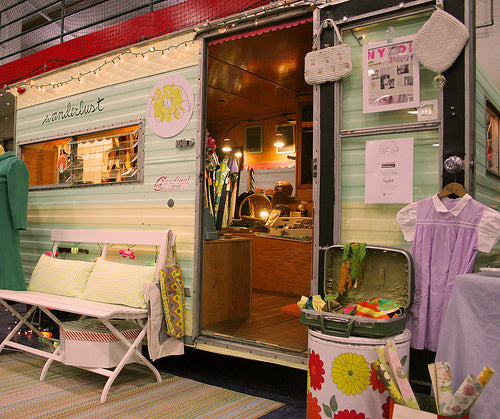
Image Credit: Wanderlust
An example is Portland, Oregon-based retailers Wanderlust. The owners of this vintage clothing business retrofitted a 1969 mint green trailer with wood paneling and other retro touches.
Now the mobile business visits community events and art fairs across the country to show off their vintage duds — all in their sweet trailer.
Set the Stage for Impulse Buying
Behavioral psychologists agree that a sense of urgency often causes you to suspend rationality in lieu of acting quickly. FOMO (fear of missing out) is very real when it comes to experiences and purchasing behavior.
Whereas most shoppers have become wise to the traditional “now or never” tactics of sales associates, a mobile retailer can help sway even the biggest skeptic. Not only is there limited inventory in a mobile retail truck, but there’s nothing more fleeting than an exclusive business on wheels.
This will play a key role in the purchasing decisions of your customers.
Case Study: Bra Fitting Meets Nomadic Retail
Born from an awkward in-store experience in 2013, True&Co. founder Michelle Lam is on a mission to re-shape how women shop for their intimates one perfectly-fitted bra at a time — and it’s all based on data.
Women go online to take a fit quiz and receive personalized recommendations beyond just band and cup size. As more women take the quiz, the algorithm is fine-tuned to allow for the many nuances that make each woman unique.
In February 2016, the company dipped its toe into physical retail for the first time with a 24-foot “Try-On Truck.”
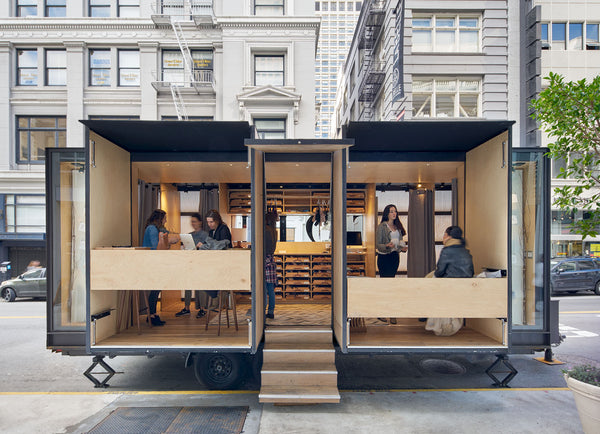
Image Credit: True&Co.
Throughout the year, the truck stopped in cities across the U.S. including Chicago, New York, and Boston. Shoppers who visited the truck could take the fit quiz and try on an assortment of bras from True&Co. and other lingerie brands.
When shoppers made a purchase, the merchandise was shipped to them. The idea was to create an experience similar to that of being in the comfort of your own home.
After the huge success of the truck, True&Co. launched a Try-On Tent (think “glamping”) which Lam considers the next generation of retail
. The nomadic fitting room is making cross-country stops so shoppers can try their brand of “fit therapy” firsthand.
True&Co. was acquired by PVH in March 2017.
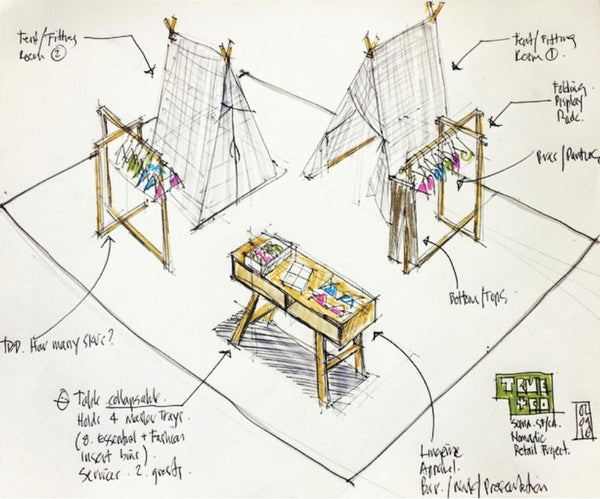
Image Credit: True&Co.
If you’re inspired by these examples, the next step is pressure-testing the practical side—permits, costs, and whether the model fits your goals.
Is it Your Time to Hit the Road?
Traveling retailers might have a lower barrier to entry, but they also have a unique set of obstacles most storefronts don’t need to consider — one of them being undefined policy around the mobile retail industry which often leads to permit issues.
Despite the existing ambiguity, mobile retail is still an attractive alternative to those wanting to start their own business.
Some mobile retailers report reaching a break-even point within a couple of years, depending on location, permits, and buildout costs. Use a simple break-even point calculation to model your fixed costs (vehicle payment, insurance, storage) and variable costs (inventory, fuel, staffing) before you commit.
Frequently Asked Questions
What are mobile businesses in retail?
Mobile businesses are retail operations that sell from a vehicle (like a truck, trailer, bus, or RV) instead of a fixed storefront. They let you bring products directly to customers at events, neighborhoods, and high-traffic areas.
How do you choose where to park or sell as a mobile retailer?
Start by testing locations where your target customers already gather—parks at lunch, community events, markets, and festivals—then track sales by stop. Confirm local rules and permits before you commit to a recurring route.
Is a mobile retail business cheaper than a brick-and-mortar store?
Often, yes—mobile retail can reduce major fixed costs like long-term leases and extensive buildouts. Your upfront and ongoing costs will still depend on the vehicle, buildout, permits, insurance, maintenance, and inventory.
What are the biggest challenges for mobile businesses?
Permitting and local policy can be unclear, and you’ll also need to manage logistics like storage, staffing, fuel, and limited selling space. Build a cost model (fixed vs. variable) and plan inventory tightly to avoid overstocking.
What are alternatives to starting a mobile retail truck?
If a vehicle buildout feels like too big a leap, try a pop-up shop, event booth, or short-term retail activation first. These options can help you validate demand and product fit before investing in a full mobile setup.
Mobile businesses can help you lower overhead, learn faster through real-world testing, and create an experience customers can’t get online. Pick one route or event series to pilot, run a break-even calculation, and set up a checkout that can move as fast as you do with Shopify POS. When you’re ready to sell in more places without adding a permanent lease, start building your mobile retail plan today.
Would you consider creating a mobile business? Share your thoughts and ideas in the comments below.

