What if you could make every email feel less like a blast and more like a conversation your customers actually want? For high-volume ecommerce stores, email list segmentation is one of the clearest ways to increase relevance, protect retention, and turn customer data into more profitable campaigns.
Key Takeaways
- Start with purchase behavior, lifecycle stage, engagement, category affinity, VIP status, and churn risk because these segments are easiest to automate and tie to revenue.
- Use segmentation data to match timing, offers, and content to customer behavior so your emails feel more useful and less repetitive.
- Prioritize segments based on revenue impact, data quality, automation readiness, and send-frequency control before building complex workflows.
- Test one variable at a time within each segment and compare results against a control group before scaling changes across your program.
Table of contents
- Historical case study: SwayChic (later rebranded as Echo Club House)
- A Million Ways to Segment a List
- How To Create Profitable Email List Segmentation
- Frequently Asked Questions
- Turn Segmentation Into Revenue With Shopify
Imagine you've been a loyal customer to the coffee shop around the corner from your house for years. Every Saturday since the weekend they opened, you've ordered the same latte, sat at the same table, and read the newspaper catching up on the events of the previous week.
I want you to explore two scenarios.
Scenario 1
You meet the owner on opening day, and casually mention how no matter what time of day it was, for the last two months, it looked like they were always working.
Instead of taking this for granted, they share this really interesting story of how their passion for coffee was ignited in their “previous life” when they had the opportunity to travel the world for business, and that they wanted to bring their personal experience to a small town. As they’re telling you this story, you look around and realize the cafe’s decor reflects this sense of worldliness, and that everything seems to have some kind of meaning or story.
This is enough to get you to come in repeatedly, and as you do, the owner makes a point to get to know your order, your routine, and share another interesting story from their travels.
As they get to know you better, they ask you to “test” new things they’re thinking of adding to the menu, give you a special coffee card for being a frequent customer, and inform you that if you ever needed to “borrow” the space for some kind of function, they’d gladly work with you and provide the coffee and food at a discount.
Nearly a year goes by, and they let you know they’re thinking about growing, and ask you personally about why you come in so regularly and for some ideas on how they could get more people into the shop.
When you see new people come in, you watch the owner treat all the new customers with the same level of respect they showed you on your first visit, but they also seem to have an even deeper level of respect and appreciation for you as well.
Scenario 2
On opening day you place your order, find a seat, and grab the newspaper. The person behind may as well have been a cardboard cutout operating the cash register, because that’s about the level of personality they offered. The experience wasn’t bad or good, so much as it was just expected.
The wall art, the music, and the furniture and decor are all pretty standard for a coffee shop.
- You never really meet the owner.
- Nobody asks your opinion.
- Nobody remembers your order.
- Nobody makes you feel special for coming in regularly.
Now, considering both scenarios, what do you do when a new coffee shop opens up near your house?
In which scenario are you more willing to ditch your current coffee shop and become a regular in the new one instead? Are you going to leave when you have been made to feel like home or are you more likely to leave when the owners simply don’t seem to care? You’ll obviously stick around.
Now Shopify doesn’t operate any coffee shops (yet), but the same principles hold true in ecommerce, specifically in email marketing with email list segmentation. With list segmentation, you can make your customers feel like you’re the owner of the coffee shop that really gets them by sending the right information at the right time.
For high-volume ecommerce stores, the best segmentation strategies usually start with purchase behavior, lifecycle stage, engagement, product or category affinity, VIP status, and churn risk. These segments are often the fastest to operationalize because they map directly to revenue opportunities, retention workflows, and automated campaigns.
Historical case study: SwayChic (later rebranded as Echo Club House)

SwayChic, which later rebranded as Echo Club House, was a California-based women’s fashion retailer. In addition to its ecommerce store, the company also operated multiple physical stores throughout Northern California.
One interesting tactic they use to get their in-store customers' emails is offering website promotions like coupons and gift card giveaways to customers at the point of sale.
Since they were already running different email campaigns, they had some initial data on things like the best days for opening emails. Anything beyond that was a mystery, though.
Getting Better Data
By using an outside vendor for data mining and analysis, they managed to get much more behavioral data, including past purchases, click-through rates, time of actual conversions, and more. The analysis connected customer-level purchase and engagement signals to campaign timing, which made it easier to see not just who opened an email, but when different customer groups were most likely to buy.
That mattered because stronger segmentation depends on linking behavior to outcomes, not just measuring top-of-funnel engagement. For more on how ecommerce teams use customer data to build segments, see Shopify’s guidance on customer segmentation.
Extra attention above all else was put into the time of actual conversion. Perhaps a customer would open their email in the morning on their way to work, but they may not have time to buy right then. They may return in the evening to make a purchase. Since the overriding goal was ROI, the time of actual purchase largely overruled all other data.
Customer Segments

After initial testing with different behavioral data, they came up with many different groups for segmentation.
One group, for example, was based on the time the campaign was sent out (5 AM, 10 AM, 5 PM), while another was based on engagement (one-time buyers, three-time buyers, no longer engaged buyers, and so on).
Results
After designing and running 12 optimized email campaigns per month, the results were in:
- Average email open rates increased by 40% (MarketingSherpa case study)
- Average clickthrough doubled (MarketingSherpa case study)
- Revenue per campaign tripled versus previous campaigns (MarketingSherpa case study)
Aside from the above measurable benefits, the optimized campaigns also helped the company fine-tune their marketing voice to look and feel like they really get their customers and what they’re all about.
Read the full MarketingSherpa case study.
A Million Ways to Segment a List
Every company knows different things about its customers depending on the products and services it offers.
For example, you might know if your customers use OneDrive or Dropbox for their files, prefer a certain brand of cereal for breakfast, or have children. Some of this information can be useful for segmentation, but it should be collected and used on a permission-based basis and handled in line with applicable privacy laws and platform policies.
There is no single segmentation framework that works for every business, but segmentation should still follow privacy, consent, and email marketing laws, and you should avoid using sensitive personal data without a lawful basis. What follows are a few segmentation ideas to help you understand what is possible.

HubSpot's email list segmentation guide outlines 30 segmentation ideas, and it remains a useful starting point if you want a broad overview.
This is by no means an exhaustive list, but rather a good starting point to build on when developing your own segmentation strategy for a high-volume store.
For larger ecommerce teams, prioritize segments by four filters before building anything: revenue impact, automation readiness, data availability, and send-frequency control. In practice, that means starting with segments that can drive repeat purchases or recover lost revenue, can be updated automatically, rely on data you already trust, and can be messaged without over-emailing the same customers.
1. Demographic Data
This is your baseline data that allows you to segment without getting overly granular and complicated.
- Age
- Gender
- Hometown and other geographic information
- Job role
- Salary range, where appropriate and lawfully collected
Just because these segments aren’t complicated doesn’t mean they’re not effective. In one targeted Johnny Cupcakes email test, segmentation contributed to a 42% increase in click-through rate, according to AdExchanger's coverage of the campaign.
If you’re doing business in the B2B realm, it’s also important to have information about your customers' organizational type and industry. Different organizations have different needs and expectations, so use that to your advantage.
The same applies to your B2B customer’s job function and seniority level. Ideally, you wouldn’t send the same information to a marketer that you do to a developer or an accountant. There’s a difference between a marketing consultant and a VP of marketing; needs and expectations differ.
2. Behavioral Data
Once you have an understanding of who is using or buying your products, try to figure out why and how they are doing it.
Are they buying for themselves, their family members, or as a gift? Are their purchases spread around your whole site, or are they mainly concentrating on certain products, categories, or brands?
You can use that data to send customers emails that are relevant to them. Try using some of these segments:
Buying frequency and purchase cycle
Some customers may buy from you on a weekly, monthly, quarterly, or yearly basis. Figure out their buying cycles and anticipate them by sending relevant content and offers just before the next likely purchase window. Likewise, if a segment of customers buys rarely from you, you can try to incentivize them with special offers or reminders.
Past purchases and changing buyer behavior
Looking at past purchases and trying to upsell additional services or complementary products is a classic ecommerce strategy.
If you have buyers who used to buy from you often but no longer do, these are the people who may need more attention through win-back campaigns, replenishment reminders, or category-specific offers.
They are still buying from somewhere, so this is often a retention opportunity rather than a dead end. This kind of product-specific segmentation can be especially powerful when your catalog depends on compatibility or fit. For example, Boost Auto used Shopify and Klaviyo data to segment by details as specific as vehicle make, model, and prior purchases so they could send highly relevant recommendations and maintenance content that drove repeat sales without increasing ad spend.
Klaviyo has a lot of really advanced targeting. We can filter down to something as specific as, 'Okay, this guy drives an '05 Chevy Silverado. What other products can we get him?' All the data flows over to Klaviyo to manage it over there. The sales just come in.
— Boost Auto (Source)
Customers who refer
Some customers repeatedly refer new business your way. Those are your biggest brand advocates. Targeted loyalty emails, refer-a-friend discounts, and early access to new products can help strengthen that relationship.
Customers who haven’t reviewed
You should always be trying to get more positive reviews of your business, so consider creating a segment that targets customers who haven't written a review yet.
Shopping cart abandoners
According to Baymard Institute, the global average cart abandonment rate is 70.19%, which makes cart recovery a major revenue opportunity. You should absolutely work on it, and CXL is a well-known resource in conversion optimization.
For a practical starting point, review a checkout usability benchmark from Baymard Institute.
Engagement level
Have you noticed an increase or decrease in the number of people who read your emails and take action? Different customers have different needs and respond differently to your efforts.
Your best customer may be your worst in terms of email engagement. It might be time to start sending less email to keep them around. Some brands also protect engagement by regularly cleaning inactive subscribers from their lists instead of continuing to send to everyone indefinitely. Canyon Coffee, for example, said it scrubbed its list constantly to remove non-responsive subscribers while maintaining a consistent newsletter cadence, helping preserve list quality as email became a key sales channel.
3. Email Readers & Content
Different email providers and readers display your content a bit differently depending on the provider, so compare tools by segmentation rules, event data support, automation depth, and Shopify integration quality before you commit. You can review options in the Shopify App Store email marketing category and learn more about the broader Shopify partner ecosystem.
Luckily, this is easy to do because most email marketing apps include built-in preview functionality that shows how your campaign looks across providers and devices.

Content in terms of topic and format is another segmentation strategy that can be very useful for getting customers to buy more.
Just because a customer's purchase history doesn’t show interest in kitchen utensils doesn’t mean they’re not interested in them. Browsing data, wish lists, and direct preference collection can all help here.
Also, specific content formats can be more appealing to certain segments of your database. Some may prefer a Pinterest-style row of pictures, while others respond better to video or more text. All of this can be tested and improved over time based on performance data.
4. Miscellaneous Others
Many businesses use satisfaction indexes to determine how happy their customer base is. Net Promoter Score (NPS) is a popular one. If you're measuring satisfaction numerically, consider sending emails segmented by your customers' level of satisfaction with your organization.
Lower scores may get emails that are more educational about your brand and story, while higher scores may be a good opportunity to ask for reviews, referrals, and upsells.
If your strategy involves both a brick-and-mortar location and an ecommerce store, segmenting based on where customers usually shop can also be useful.
Ecommerce customers could receive offers that can only be redeemed online, while those who prefer physical shops could get invites to in-store events and local promotions.
Practical segmentation framework for high-volume ecommerce stores
If you run a larger store, broad ideas are helpful, but execution usually improves when you organize segments into a repeatable operating model.
RFM segmentation groups customers by recency, frequency, and monetary value. This helps you identify recent high-value buyers, loyal repeat customers, and lapsed customers who may need a win-back flow.
Lifecycle stage — Separate first-time buyers, active repeat buyers, loyal customers, and lapsed customers. Each stage usually needs different messaging, offers, and cadence.
Predicted next purchase date — For replenishable products, estimate when a customer is likely to reorder and trigger reminders shortly before that date.
AOV and VIP tiers — Create segments for top spenders, high average order value customers, and loyalty members. These groups often respond well to early access, concierge-style support, and exclusive launches.
Discount affinity — Some customers buy only when there is a promotion, while others buy at full price. Segmenting by discount behavior can help protect margin and avoid overusing offers.
Category affinity — Group customers by the categories they browse or buy most often, such as skincare, footwear, or home goods, so your campaigns reflect demonstrated interest.
Churn-risk segments — Identify customers whose purchase cadence or engagement has dropped below normal. These segments are often strong candidates for win-back automations and reduced-frequency testing.
These segment types are commonly used in modern ecommerce retention programs and are especially useful when your catalog, customer base, and campaign volume are too large to manage manually.
Once you know which segments matter most, the next step is turning them into a repeatable process your team can actually run.
How To Create Profitable Email List Segmentation
Being effective at list segmentation can be a major win for your ecommerce business, but the number of possible strategies can make it seem daunting.
If you’re not sure where to start, begin with a small set of high-impact segments: purchase behavior, lifecycle stage, engagement, category affinity, VIP status, and churn risk. For high-volume stores, these segments are usually the most practical because they are measurable, automatable, and closely tied to revenue and retention.
Then follow this 5-step process:
Step 1. Figure Out Your Data Needs

Having read the different segmentation strategies available, you should now have a better picture of what kind of data you need to pull them off.
To understand what still needs to happen to get the data you need, ask yourself these three questions:
- What data do I already have?
- What data do I need to start collecting? This is data that you have the ability to collect, but aren’t using at the moment.
- What data do I need to ask for? This is the data that you need to request from users directly or engineer your way into collecting.
It’s likely that you don’t have all the data points you want or need. If so, this is the place to spend more development and operations resources.
Step 2. Choose Your Segments
Now that you understand what data you have access to, it’s time to go through the segmentation strategies again and decide which ones to test first.
Choose segments based on five criteria: the business goal, the size of the audience, the reliability of the data, the expected lift, and whether the segment can be automated and maintained over time. A segment that looks smart on paper but requires constant manual cleanup is usually a poor long-term choice for a high-volume store.
In practice, that often means starting with segments tied to repeat purchase behavior, lapsed customers, high-value customers, and category interest before moving into more experimental models. If your current setup is producing weak engagement or high unsubscribe rates, an outside audit can sometimes uncover segmentation problems faster than internal trial and error. Set Active founder Lindsay Carter said a $10,000 audit of the brand’s email flows, segmentation, and optimization strategy paid for itself quickly after surfacing issues and helping clean up the program ahead of Black Friday.
We obviously made that 10K back in no time.
— Lindsay Carter, Founder at Set Active (Source)
Step 3. Enlist the Right Email Marketing Tool
You’ve figured out what data you need and how to get it. You have your segments drawn out on paper. Now is the time to make those segments work with your email marketing service provider.
There are a million and one different email marketing tools. Thankfully, you can cut through a lot of the clutter by reviewing Shopify-compatible options in the Shopify App Store email marketing category.
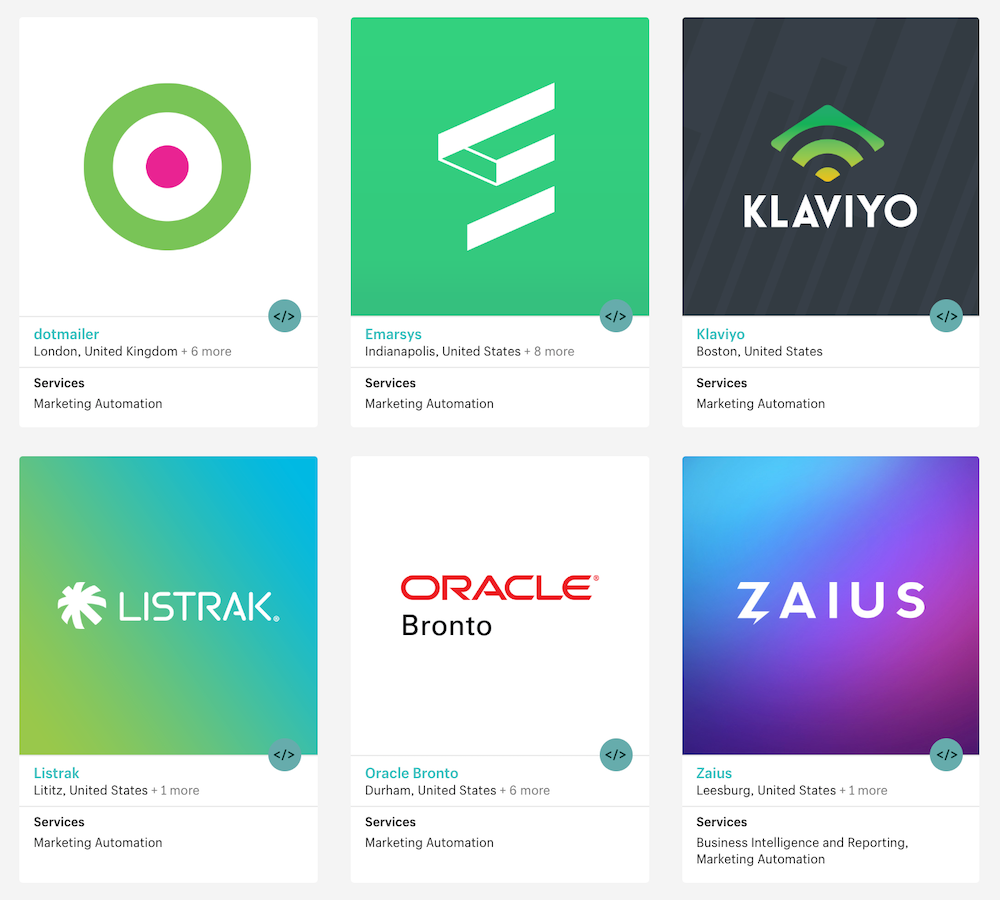
Most of these tools include segmentation features, automation builders, and reporting. Review the platform documentation for data sync, event tracking, dynamic content, and flow logic so your segments are maintainable as your store grows.
Step 4. Create Content
By now you should understand, and ideally have set up, the segmentation strategies you want to use with your email marketing tool of choice.
The next step is to write and design content targeted to each of those groups.
You don’t have to write all campaign content at the same time. Depending on your segments and the frequency you choose, you can build the highest-impact automations first and expand from there.
For example:
- Send replenishment reminders to repeat buyers when they are nearing their expected reorder date.
- Send win-back offers or product education to lapsed customers whose purchase cadence has dropped.
- Give VIP customers early access to launches, limited editions, or loyalty perks.
- Send browse-abandonment emails to shoppers who viewed a category or product repeatedly without purchasing.
The more closely the message matches the customer’s recent behavior, the more useful the campaign tends to feel.
Step 5. Test, Rinse, Repeat
Now comes the fun part: actually sending your emails to your newly segmented customer database and seeing the results of your work.
Once you have sent out a few campaigns, you should have enough data to compare your efforts to your old campaigns and also between new campaigns inside each segment.
Open rates for one campaign on a specific segment went through the roof? Study what worked and use the insights to iterate on that. Pictures improving click-through rates? Use them more.
Use a simple testing framework: define one primary KPI per segment, test one variable at a time, set a minimum sample size before calling a winner, and compare results against a control group before rolling changes out broadly.
There are many ways to refine segmented campaigns over time based on performance data, and the best programs keep learning rather than assuming the first version is the final one.
Turn Segmentation Into Revenue With Shopify
Email list segmentation works best when it helps you send more relevant campaigns, recover lost revenue, and build stronger customer loyalty over time. The biggest gains usually come from starting with practical segments you can trust, automating them inside your workflow, and improving them with ongoing testing.
Your next move is simple: audit the customer data you already have, choose two or three high-impact segments, and launch one automated campaign for each. Then use Shopify-compatible tools in the Shopify App Store email marketing category to scale what works and turn smarter segmentation into sustained growth.
Email List Segmentation FAQ
What is email list segmentation for ecommerce?
Email list segmentation is the practice of dividing your subscribers into groups based on traits like purchase history, engagement, lifecycle stage, or product interest. For ecommerce, it helps you send more relevant campaigns that improve retention, conversions, and customer experience.
How do I start segmenting an email list?
Start with segments that are easy to measure and automate, such as repeat buyers, first-time buyers, lapsed customers, VIPs, and category shoppers. Then connect each segment to one clear goal, like increasing repeat purchases or recovering abandoned carts.
Why is segmentation important for high-volume stores?
High-volume stores usually have too many customers, products, and campaigns to rely on one-size-fits-all messaging. Segmentation helps you prioritize relevance at scale, reduce wasted sends, and align automations with revenue opportunities.
What does email list segmentation cost?
The cost depends on your email platform, data setup, and how advanced your automation needs are. Many Shopify-compatible tools include basic segmentation, while more advanced programs may require stronger data sync, analytics, and workflow support.
What are the best alternatives to demographic segmentation?
Behavioral and lifecycle segmentation are often stronger alternatives because they reflect what customers actually do, not just who they are. Purchase cadence, category affinity, engagement level, and churn risk are especially useful for ecommerce retention programs.