What if you could win more customers and keep them longer simply by replying faster? Speed is no longer a nice-to-have in customer service, it shapes whether prospects convert, whether issues escalate, and whether customers come back.
Key Takeaways
- Faster customer service helps you convert more inbound leads, reduce support frustration, and strengthen long-term customer retention.
- Customers now expect quick responses across email, social media, chat, and messaging apps, not just traditional support channels.
- Self-service resources, lead routing, social escalation workflows, and live chat can significantly improve response times at scale.
- Making response speed measurable gives your team a clear operational target and creates accountability for better follow-up.
Table of contents
- If You Snooze, You Lose
- New Customer Service Channels, Faster Communications
- How Can You up the Ante?
- Frequently Asked Questions
- Make Speed Your Customer Service Advantage
Just ask LaunchBit’s (recently acquired by BuySellAds) CEO and co-founder Elizabeth Yin.
Speed was the company’s secret to winning over new clients. When the business boomed, the team struggled to maintain their individual inboxes. Yet, they prioritized the same high level of speed and customer service to stay fresh in their customers’ minds. The strategy worked out well for the company.
If You Snooze, You Lose
Fast response times matter more than ever because buyers now expect quick answers across email, social, chat, and messaging apps. To improve enterprise response times, focus on four areas: self-service, faster lead routing, social escalation workflows, and live chat or messaging support.
Until recently, the enterprise sector has been able to thrive by focusing on the quality of customer service. But expectations are changing rapidly, and fast customer service is becoming a competitive requirement for enterprise teams.
And while “quality” service with a personal touch is a reasonable starting point, fast customer service has a clearly defined role. A Genesys customer experience resource center highlights speed and responsiveness as core parts of a strong service experience.
Customer care research has also consistently shown that service leaders view response speed as a major factor in customer satisfaction and retention.
In general, B2B companies aren’t meeting this growing expectation.
Slow response times create a clear competitive gap
A Harvard Business Review study of 2,241 US firms found that enterprise leads often receive slow responses from sales teams. The results revealed:
- In the 2011 HBR study, 37% of companies responded to their leads within an hour
- In the 2011 HBR study, the average response time was 42 hours
- In the 2011 HBR study, 23% of companies never responded
It’s evident that a majority of enterprises are failing to make fast customer service a priority, and the opportunity is ripe for companies that are willing to engage customers and prospects before competitors call them.
Faster follow-up improves satisfaction and retention
Case in point: A client of CustomerGauge, a global B2B firm, made a decision to improve its Net Promoter® Score by focusing on response time.
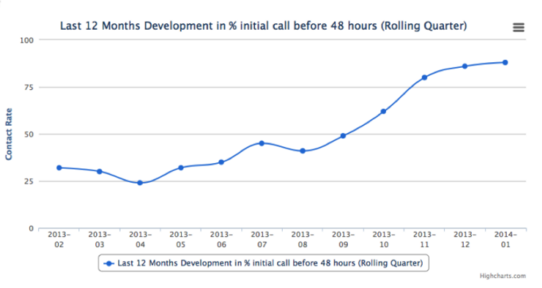
Before the formation of this goal, the company responded to 25% of feedback within 48 hours. In one year, the company increased responses to 80% to 85% of feedback within 48 hours. The outcome? An 11-point increase in its Net Promoter® Score.
In this case, the operational change was simple: the team made response time a measurable goal and improved follow-up discipline. For enterprise support teams, that matters because faster follow-up can increase conversion on inbound opportunities and strengthen retention by showing customers their feedback is being acted on quickly. Shopify merchant Backyard Butchers saw similar gains after unifying customer and order data in one system: the company reported about a 50% decrease in customer service ticket resolution times, 70% faster execution of customer order changes, and a 30% increase in customer satisfaction score.
Customer support has improved because now that everything's integrated in the same system, we can see orders so much faster. We can pull customer data so much faster, so our response times have shortened.
— Tyler Medina, Head of Marketing at Backyard Butchers (Source)
The HBR study reported that companies contacting leads within an hour were about seven times more likely to have meaningful conversations with decision-makers than companies that waited longer than an hour.
Zendesk’s CX Trends 2026 report says 74% of consumers now expect customer service to be available 24/7.
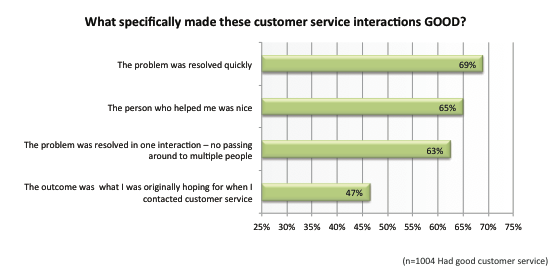
From these findings, it’s clear that the speed of customer service has a significant impact on a company’s bottom line. Faster responses can help convert more inbound leads, reduce frustration during support interactions, and improve retention over time.
New Customer Service Channels, Faster Communications
Social channels have raised response-time expectations
Life was simpler for companies when emails and phone calls were the main channels of customer service. But somewhere along the way, social media platforms and messaging apps disrupted the way customers communicate with companies.
Today, customers reach out to enterprise companies via LinkedIn, Facebook, and X (formerly Twitter). Recent B2B research continues to show that social media remains a meaningful source of information throughout the buying journey. This shows that social media now plays a meaningful role in enterprise customer service.
But just having a social media footprint is not enough; customers expect fast, consistent responses across channels.
Sprout Social’s social customer care research shows that customers increasingly expect brands to respond quickly on social media, especially when they are asking for help or reporting a problem.
Despite this, many enterprise businesses still fall short on social response times. Many customers still do not receive replies to public complaints on social media, and slow response times on social media can frustrate customers and increase churn risk.
Response time on public channels also shapes trust. When customers see quick, helpful replies on social media, it can improve brand perception, encourage repeat purchases, and reduce the chance that complaints escalate publicly.
Here’s how customers react when they receive a quick response on social media:

Messaging apps and business messaging tools
Messaging apps are also reshaping customer service. People are using WhatsApp, Facebook Messenger, and other messaging channels to engage with customer service reps instead of relying only on email and phone calls.
What’s intriguing is that the creators of these applications are integrating features that allow customers to use them as a customer service tool. For instance, WhatsApp Business now gives businesses tools to communicate with customers, share product information, automate greetings, and manage support conversations.
Meta supports private business messaging through Messenger and related business tools. Businesses can use inbox and automation features to organize incoming messages, route conversations, and maintain faster response times.

Meta’s business tools also provide response metrics and workflow features that help teams monitor performance and improve reply times. Many messaging tools support saved replies for common questions, along with inbox management and automation for handling high message volume more efficiently.
Zendesk’s CX Trends 2026 report shows that messaging, chat, and digital support channels remain important parts of modern service. Because conversations are private and immediate, customers using these apps expect to receive a quick, personal response.
Create a customer journey map for faster support handoffs: customer journey map
How Can You up the Ante?
Providing high-quality customer service is essential to improving your customers’ experience. However, slow response times can still create negative support experiences. Here are some tips to speed up your customer service:
Build self-service that solves common questions
- Offer Self-Service: Customers want their issues resolved in a timely manner and often feel taking action themselves is quicker than contacting company representatives. Providing things like FAQs, forums, and how-to videos is a great way to provide quick answers to customer queries. McKinsey’s research on the customer experience opportunity for online retailers explains how better digital experiences and self-service can reduce friction and improve support efficiency. Self-service resources can be used for websites, social media pages, and messaging apps.
Route leads and prioritize urgent conversations
- Be Proactive with Inbound Leads: In an enterprise CRM, customer service reps are juggling dozens of tasks throughout the day. It can easily be a couple of hours before they see a lead response notification. By auto-assigning leads for follow-up to the appropriate rep, you can cut down your lead response time.
- Set up Social Media Alerts: Build a social listening and escalation workflow that flags high-priority posts, brand mentions, and service complaints for quick follow-up. Use social monitoring alerts to track important phrases and route urgent mentions into your help desk or CRM, so your team can respond faster across social channels.
Unified customer data can make these workflows much more effective. For example, AG Jeans connected its customer experience and returns tools directly with Shopify, so agents could see customer and sales data in one place while AI handled routine inquiries, helping the team respond faster to more complex issues.
When CX and Returns tools have direct access to customer and sales data by integrating with Shopify, this allows our agents to provide a significantly faster and improved experience for our customers.
— Graham McCulloch, Director of Ecommerce & Brand Marketing at AG Jeans (Source)
Use chat and messaging to reduce wait times
- Utilize In-app Chat Software: No other customer service channel competes with the speed of communication that messaging apps can offer. With in-app chat software, you can respond to queries immediately, as well as send pre-approved push notifications, such as support hours or status updates.
The enterprise customer service landscape is changing as customer expectations evolve. To help your business scale smoothly, plan for speed across every customer service channel. Audit your response times across every channel, set clear service-level targets, and give your team the workflows and tools they need to reply faster.
Make Speed Your Customer Service Advantage
Fast customer service helps you do more than answer questions quickly—it can improve lead conversion, reduce customer frustration, and strengthen retention across every channel. Start by measuring your current response times, fixing the biggest bottlenecks, and investing in self-service, routing, and messaging tools that help your team move faster. If you’re ready to create smoother customer experiences at scale, explore Shopify’s tools and start building a faster support operation today.
Customer Service FAQ
What is fast customer service?
Fast customer service means responding quickly enough to match customer expectations on each channel, whether that is email, social media, chat, or messaging apps. In practice, it requires clear service targets, efficient routing, and tools that help your team resolve issues without unnecessary delays.
Why does response time matter so much?
Response time affects whether prospects stay engaged, whether support issues escalate, and how customers perceive your brand. Faster replies can improve satisfaction, increase the chance of meaningful sales conversations, and strengthen retention over time.
How can businesses improve customer service speed?
Start by auditing response times across every support channel, then set measurable service-level goals for your team. Add self-service resources, automate lead routing, create social escalation workflows, and use chat or messaging tools to reduce wait times.
Does improving customer service speed cost a lot?
Not always. Many improvements come from better workflows, clearer ownership, and stronger follow-up discipline rather than major new spending. Businesses often start with lower-cost changes like FAQs, saved replies, routing rules, and response-time tracking.
What are the best alternatives to hiring more support staff?
Before expanding headcount, improve self-service content, automate repetitive replies, and route conversations to the right team faster. You can also use live chat, messaging tools, and social monitoring workflows to handle volume more efficiently with your current team.